
What Training Records Should Employers Maintain?


Employee training is an essential part of building a productive, safe, and compliant workplace. Organizations invest significant resources in onboarding employees, developing professional skills, delivering compliance training, and preparing workers for changing job responsibilities. However, delivering training is only one part of an effective learning and development strategy.
Employers must also maintain accurate records documenting which employees received training, what subjects were covered, when training occurred, and whether participants successfully completed the required activities.
Training records provide evidence of an organization's commitment to employee development, workplace safety, and regulatory compliance. They also help employers identify skills gaps, monitor certification requirements, evaluate training effectiveness, and prepare for audits.
Without a structured approach to training recordkeeping, organizations may struggle to demonstrate compliance, verify employee qualifications, or determine whether their workforce has completed necessary training.
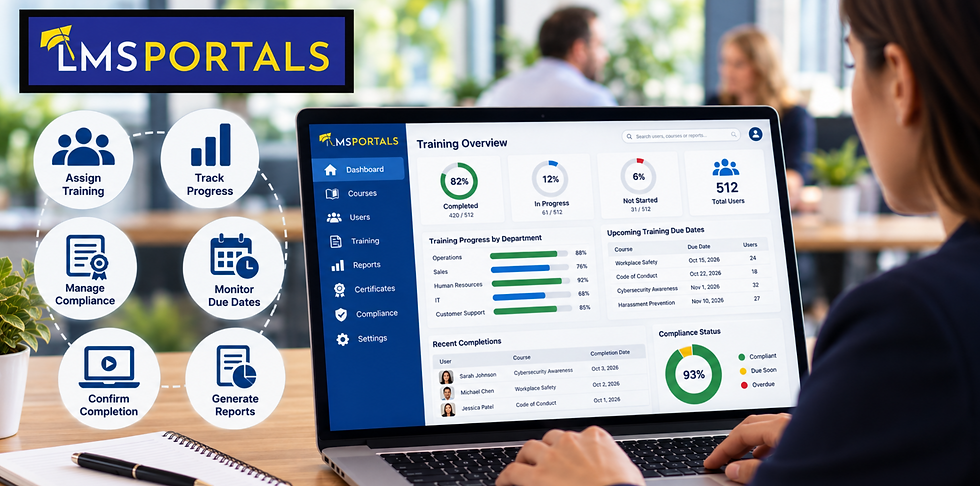
A modern learning management system (LMS) can simplify this process by centralizing training information, automating recordkeeping, and providing administrators with access to employee learning histories.
Understanding which training records employers should maintain is an important first step toward building an effective training management program.
Why Are Employee Training Records Important?
Training records serve several important purposes beyond documenting course participation. They provide organizations with reliable information about workforce qualifications, compliance obligations, and professional development activities.
Demonstrating Regulatory Compliance
Many industries operate under regulations requiring employers to provide specific types of employee training.
Depending on the organization, these requirements may involve workplace safety, harassment prevention, data protection, healthcare procedures, or industry-specific certifications.
Regulatory agencies may require employers to demonstrate that employees received appropriate training and that the organization maintained sufficient documentation.
Accurate records help employers respond to regulatory inquiries and demonstrate that required training activities were completed.
Supporting Workplace Safety
Training documentation is particularly important in industries where employees operate equipment, handle hazardous materials, or perform potentially dangerous tasks.
Employers need to know whether workers have received the training necessary to perform their responsibilities safely.
Maintaining training records helps organizations identify employees who require additional instruction, refresher courses, or updated certifications.
Improving Workforce Development
Training records also provide valuable information for employee development.
Managers can review completed courses, identify skill gaps, and recommend learning opportunities aligned with individual career goals.
Over time, these records help organizations evaluate workforce capabilities and plan future training investments.
What Types of Employee Training Records Should Employers Maintain?
Although specific requirements vary by industry and jurisdiction, several categories of training documentation are valuable for most organizations.
Employee Training Participation Records
Employers should maintain records identifying employees who participate in training programs.
These records typically include:
Employee name and unique identification number
Department, location, or organizational unit
Training course or program title
Date of enrollment
Training dates
Participation or attendance status
Instructor or training provider, when applicable
Participation records help administrators determine who has received training and identify employees who have not yet completed assigned activities.
Training Completion Records
Completion records document whether employees successfully finished required training.
These records may include completion dates, course status, assessment results, and other information used to verify that training requirements were satisfied.
For compliance-related training, completion records can be particularly important because they provide evidence that employees fulfilled their assigned obligations.
Employers should distinguish between attending a training session and successfully completing a course when the training program requires assessments or other completion criteria.
Assessment and Examination Results
Many training programs include quizzes, examinations, practical evaluations, or competency assessments.
Employers may need to maintain records documenting:
Assessment dates
Scores or pass/fail results
Minimum passing requirements
Number of attempts
Practical competency evaluations
Remedial training activities
Assessment records provide additional evidence that employees demonstrated an understanding of the training material.
However, passing a written assessment does not necessarily establish practical competency. Certain roles may require direct observation or hands-on skills verification.
Training Certificates and Credentials
Certificates provide formal recognition that employees completed training or achieved a specific qualification.
Employers should maintain copies or verifiable electronic records of relevant certificates, including information such as the issuing organization, completion date, expiration date, and credential identification number.
Certificate records are especially important for organizations that must verify employee qualifications before assigning certain responsibilities.
Training Materials and Course Versions
Employers should also consider maintaining documentation of the materials used during training.
This may include course outlines, learning objectives, presentation materials, instructional documents, policies, and course version information.
Maintaining this information helps organizations establish what employees were taught at a particular point in time.
This can be especially valuable when regulations, internal policies, or operational procedures change.
What Compliance Training Records Should Employers Keep?
Compliance training often requires additional attention because organizations may need to demonstrate adherence to specific laws, regulations, or industry standards.
Workplace Safety Training Records
Employers subject to Occupational Safety and Health Administration (OSHA) requirements may need to document training related to workplace hazards and safety procedures.
Examples include hazard communication, personal protective equipment, emergency procedures, equipment operation, and other job-specific safety topics.
The exact documentation and retention requirements depend on the applicable OSHA standard. Not every safety training requirement carries the same recordkeeping obligation.
Harassment Prevention and Workplace Conduct Training
Organizations may provide training addressing sexual harassment prevention, discrimination, workplace conduct, and employee reporting procedures.
Some states impose specific training and documentation requirements.
Employers should maintain records identifying participants, training dates, course content, and completion status where applicable.
These records may help demonstrate that employees received instruction on organizational policies and workplace expectations.
Data Security and Privacy Training
Organizations handling confidential information often provide cybersecurity awareness and data protection training.
Training records may document employee instruction on password security, phishing prevention, information handling, privacy policies, and incident reporting.
Maintaining these records helps organizations demonstrate that employees have received relevant guidance about protecting sensitive information.
Industry-Specific Compliance Training
Certain industries face additional training requirements.
Healthcare organizations may need documentation related to patient privacy, infection control, and clinical procedures. Financial services organizations may require training related to regulatory compliance and information security.
Construction, manufacturing, transportation, and energy companies may have specialized safety and operational training obligations.
Employers should identify the requirements applicable to their industry rather than assuming that one universal training recordkeeping standard applies to every organization.
How Long Should Employers Retain Training Records?
Training record retention is an important consideration for organizations developing compliance and workforce development policies.
Retention Requirements Vary
There is no single retention period covering every type of employee training.
Requirements may differ based on federal regulations, state laws, industry standards, contractual obligations, and the specific training activity.
Some records must be maintained for defined periods, while other training regulations establish obligations without prescribing a particular retention schedule.
Employers should review applicable requirements and consult qualified compliance or legal professionals when establishing retention policies.
Establishing an Internal Retention Policy
Organizations should develop documented policies identifying which training records must be retained and for how long.
A retention policy should consider regulatory obligations, business needs, employee privacy, contractual requirements, and potential litigation holds.
Records should not be deleted simply because an employee leaves the organization if an applicable retention requirement remains in effect.
Protecting Employee Training Information
Training records may contain personal information, assessment results, and employment-related data.
Employers should implement appropriate access controls, security safeguards, and data management procedures.
Only authorized individuals should have access to information necessary for their responsibilities.
How Can Employers Organize and Manage Training Records?
As organizations grow, managing training records through spreadsheets, email attachments, and disconnected files can become increasingly difficult.
A centralized approach helps improve accuracy, consistency, and administrative efficiency.
Establishing Standardized Recordkeeping Procedures
Employers should define consistent procedures for recording training participation, completion, assessments, and certifications.
Standardized practices reduce the likelihood of missing information and make it easier to compare training activity across departments and locations.
Assigning Training Requirements
Training requirements should be aligned with employee responsibilities.
For example, supervisors may require management and harassment prevention training, while equipment operators may need specialized safety instruction.
Organizing employees into groups based on roles, departments, or locations helps administrators assign appropriate courses.
Monitoring Incomplete and Overdue Training
Employers should regularly review training records to identify incomplete assignments, overdue courses, and upcoming certification expirations.
This proactive approach helps organizations address training gaps before they become compliance or operational problems.
How Does an LMS Improve Employee Training Recordkeeping?
A learning management system provides a centralized environment for delivering, tracking, and managing employee training.
Rather than maintaining separate records across multiple systems, employers can use an LMS to organize learning activities and monitor employee progress.
Automated Training Tracking
An LMS can automatically capture enrollment information, course progress, completion status, and assessment results for supported learning activities.
This reduces manual recordkeeping and helps administrators maintain more consistent training histories.
Centralized Reporting
LMS reporting capabilities allow administrators to review training activity across employees, courses, departments, and organizational groups.
Reports can help identify completion rates, outstanding assignments, and training participation trends.
Certification and Recertification Management
Where supported by the platform and course configuration, an LMS can help organizations track certificates and recurring training requirements.
This is particularly valuable for employers managing annual compliance courses, professional qualifications, or periodic refresher training.
Supporting Online and Instructor-Led Training
Organizations often use a combination of self-paced online courses, virtual instructor-led sessions, and in-person training.
An LMS can provide a central location for managing records associated with these different learning formats, subject to the platform's attendance and completion tracking capabilities.
What Are the Benefits of Working with LMS Portals?
LMS Portals provides a flexible, cloud-based learning management platform designed to help organizations deliver, manage, and track employee training.
Its multi-tenant architecture is particularly valuable for businesses managing training across multiple departments, locations, subsidiaries, or client organizations.
Centralized Training Management
LMS Portals enables organizations to manage online training programs through a centralized platform.
Administrators can organize courses, manage learners, monitor progress, and access training reports without relying on disconnected administrative processes.
This helps reduce complexity while improving visibility into employee learning activities.
Multiple Branded Training Portals
One of the distinguishing capabilities of LMS Portals is its support for multiple branded learning environments.
Organizations can establish separate portals for different business units, geographic locations, partner organizations, or clients while maintaining centralized administrative oversight.
This approach supports organizations with complex training structures and allows each audience to have a dedicated learning experience.
SCORM Course Support
LMS Portals supports SCORM-based eLearning content, enabling organizations to deliver interactive training developed using compatible authoring tools.
SCORM functionality supports standardized communication of learning activity data, such as course completion, progress, and assessment results, depending on the content package and its configuration.
This helps organizations manage training developed by different content providers.
Flexible Training Administration and Reporting
Administrators can manage learners, organize training assignments, and review course participation and completion information.
These capabilities help employers monitor training requirements, identify gaps, and maintain more organized employee learning histories.
Scalable Training Infrastructure
As organizations expand, their training requirements often become more complex.
LMS Portals is designed to support multiple training environments, making it suitable for organizations managing growing employee populations, distributed teams, and external training audiences.
Its architecture allows organizations to expand their learning programs without requiring a completely separate LMS implementation for each audience.
Support for Training Providers and Service Partners
LMS Portals also supports training companies, consultants, and service providers that deliver learning programs to multiple business clients.
Separate branded portals allow providers to manage distinct client training environments while benefiting from a common platform.
This creates opportunities for recurring training services, compliance management, and ongoing learning administration.
What Are the Best Practices for Maintaining Employee Training Records?
Employers can improve training recordkeeping by combining clear administrative policies with appropriate technology.
Review Training Requirements Regularly
Organizations should periodically review regulatory requirements, internal policies, and job responsibilities to determine whether training programs need updating.
Maintain Accurate and Complete Records
Training records should clearly identify who completed training, when it occurred, and what requirements were satisfied.
Employers should also preserve relevant supporting documentation when required.
Conduct Periodic Training Audits
Internal reviews can identify missing records, expired credentials, incomplete assignments, and inconsistencies in training documentation.
Addressing these issues proactively helps improve audit readiness.
Use Technology to Reduce Administrative Work
A centralized LMS can reduce dependence on manual spreadsheets and fragmented recordkeeping processes.
Automated tracking and accessible reporting make it easier to manage training across larger employee populations.
Building a More Effective Training Recordkeeping Strategy
Maintaining accurate employee training records is an important responsibility for employers across nearly every industry.
These records support regulatory compliance, workplace safety, employee development, and operational accountability.
Organizations should maintain appropriate documentation of training participation, course completion, assessment results, certifications, and relevant instructional materials. They should also establish retention policies aligned with applicable legal and business requirements.
As training programs grow, centralized technology becomes increasingly valuable.
LMS Portals helps organizations simplify training administration, improve visibility into employee learning activities, and support scalable training programs across multiple audiences.
By combining structured recordkeeping practices with a flexible learning management platform, employers can strengthen training oversight, reduce administrative complexity, and build a more consistent approach to workforce development.
About LMS Portals
LMS Portals provides a flexible, SaaS-based multi-tenant learning management system for delivering training to employees, customers, partners, clients, and other learning audiences.
Our multi-portal architecture enables organizations to launch dedicated, branded learning environments while centrally managing users, courses, compliance, reporting, and administration.
The platform includes tools for creating and delivering SCORM-compliant courses, a library of ready-made training courses, and Learning Paths for building structured training programs. LMS Portals also supports virtual instructor-led training, certification programs, automation, reporting, and social learning.
Together, these capabilities make LMS Portals a scalable solution for organizations managing training across multiple audiences.
Contact us today to get started or visit our Partner Program pages


Comments