
How Do Companies Turn Existing Training Materials Into Online Courses?


Most organizations already have a significant amount of valuable training content. PowerPoint presentations, employee manuals, policy documents, PDFs, instructional videos, and instructor-led training materials often contain the knowledge employees need to perform their jobs effectively.
The challenge is that these materials were not necessarily designed for online learning.
A presentation created for a classroom session may depend on an instructor to explain important concepts. A lengthy training manual may contain valuable information but provide little opportunity for interaction. A recorded webinar may cover an important topic without offering a way to assess understanding or track completion.
As companies expand their training programs, many are looking for ways to convert these existing resources into structured online courses that can be delivered through a learning management system (LMS).
By transforming existing training materials into eLearning courses, organizations can preserve institutional knowledge, reduce repetitive training activities, improve consistency, and make learning more accessible to employees, customers, and partners.
Why Do Companies Convert Existing Training Materials Into Online Courses?
Organizations invest considerable time and resources in developing training materials. Converting those resources into online courses allows companies to extend their value without starting from scratch.
Making Training More Accessible
Traditional training materials are often distributed through email, shared folders, or classroom sessions.
This can make it difficult for employees to locate the information they need or complete training at a convenient time.
Online courses provide a more structured learning experience. Employees can access assigned training through an LMS and work through the material according to the organization's requirements.
This is particularly valuable for companies with remote employees, multiple locations, or different work schedules.
Creating Consistent Training Experiences
Instructor-led training can vary depending on who delivers the material.
Different instructors may emphasize different concepts, skip certain topics, or provide inconsistent explanations.
Converting existing materials into standardized online courses helps ensure that learners receive the same core information.
This consistency can be especially important for onboarding, compliance, safety, operational procedures, and product training.
Reducing Repetitive Training Activities
Organizations frequently deliver the same training to new employees, customers, or partners.
An online course can be reused across multiple training sessions and audiences.
Rather than scheduling an instructor every time someone needs training, companies can provide access to a structured course that learners complete independently.
What Types of Training Materials Can Be Converted Into eLearning?
Many organizations are surprised by how much existing content can serve as the foundation for online courses.
The materials do not necessarily need to be professionally designed or originally created for digital learning.
PowerPoint Presentations
PowerPoint is one of the most common starting points for eLearning development.
Organizations often have presentations covering employee onboarding, company policies, product knowledge, operational procedures, leadership development, and other topics.
These presentations can be transformed into online courses by adding instructional content, navigation, interactions, assessments, and other learning elements.
However, effective conversion involves more than simply uploading slides to an LMS.
The presentation may need to be reorganized or expanded so learners can understand the material without an instructor.
PDFs and Training Manuals
Training manuals, employee handbooks, policy documents, and standard operating procedures often contain extensive institutional knowledge.
These documents can be converted into structured learning modules that focus on specific objectives.
For example, a lengthy employee handbook might become a series of onboarding courses covering workplace conduct, company policies, cybersecurity, benefits, and operational expectations.
Breaking large documents into manageable learning experiences can make the information easier to understand and retain.
Videos and Recorded Webinars
Organizations frequently record training sessions, presentations, demonstrations, and webinars.
These recordings can become valuable components of online courses.
A long video might be divided into shorter segments, supplemented with explanatory material, and followed by knowledge checks.
This approach allows companies to reuse existing video content while creating a more structured learning experience.
Instructor-Led Training Materials
Classroom training often includes instructor guides, participant workbooks, exercises, presentations, and assessments.
These resources can provide a strong foundation for self-paced online learning.
The conversion process typically involves identifying which activities can be adapted for
independent learners and which require a different instructional approach.
What Is the Process for Converting Training Materials Into Online Courses?
Converting existing content into effective eLearning generally follows a structured development process.
Step 1: Review the Existing Materials
The first step is evaluating the available content.
Organizations should identify which materials are current, accurate, relevant, and suitable for conversion.
This review may also reveal outdated information, duplicate content, or gaps that need to be addressed.
Not every document or presentation needs to become a separate course. Related materials can often be combined into a more logical learning experience.
Step 2: Define the Learning Objectives
Before development begins, organizations should determine what learners need to know or be able to do after completing the training.
Learning objectives help guide the course structure, content selection, interactions, and assessments.
For example, a cybersecurity course might focus on recognizing phishing attempts, protecting confidential information, and reporting suspicious activity.
These objectives provide a clearer direction than simply converting every slide or page into an online format.
Step 3: Organize the Content
Existing training materials may not follow the structure best suited for self-paced learning.
The content may need to be divided into modules, lessons, or smaller learning segments.
A well-organized course introduces the topic, explains important concepts, provides examples, reinforces understanding, and evaluates learning.
This structure helps learners progress through the material logically.
Step 4: Develop the eLearning Experience
Once the content has been organized, it can be transformed into an online course.
Development may include graphics, narration, interactive elements, videos, scenarios, knowledge checks, and assessments.
The level of interactivity should reflect the learning objectives and complexity of the subject.
Some courses may require straightforward content presentation, while others benefit from simulations or scenario-based activities.
Step 5: Test and Publish the Course
Before launch, the course should be reviewed for accuracy, usability, technical functionality, and compatibility with the intended LMS.
Testing may include navigation, assessment scoring, completion requirements, and reporting behavior.
Once approved, the course can be published and made available to learners.
What Is the Difference Between Uploading a Document and Creating an Online Course?
A company can often upload a PDF, presentation, or video directly into an LMS.
However, making a document available does not necessarily create a complete learning experience.
Content Access Versus Structured Learning
Uploading a document gives employees access to information.
An online course organizes that information around learning objectives and guides employees through the material.
The course may also include explanations, examples, practice activities, and assessments.
This distinction is particularly important when organizations need employees to demonstrate understanding rather than simply acknowledge that they received a document.
Tracking and Assessment
A standalone document may provide limited information about whether an employee understood the material.
A properly developed online course can incorporate assessments and completion requirements.
When delivered through a compatible LMS, these activities can generate training records that help administrators monitor learner progress.
How Does SCORM Help Companies Deliver Online Training?
SCORM, or Sharable Content Object Reference Model, is a widely used standard for packaging eLearning courses and enabling communication with compatible learning management systems.
SCORM can play an important role when organizations convert existing training materials into trackable online courses.
SCORM Course Packaging
A SCORM-compliant course can be packaged for delivery through an LMS that supports the relevant SCORM version.
This makes it possible to develop courses using compatible authoring tools and deploy them through a learning management platform.
Training Completion and Assessment Tracking
Depending on the course configuration and LMS capabilities, SCORM can communicate information such as course completion, pass or fail status, assessment scores, and learner progress.
This provides organizations with greater visibility into training activity.
For compliance and other mandatory training programs, these records can be particularly valuable.
Should Companies Convert Training Materials Internally or Outsource Development?
Organizations can develop online courses internally, outsource the work, or use a combination of both approaches.
The right choice depends on available resources, technical expertise, project complexity, and training volume.
Internal eLearning Development
Internal development can work well when an organization has dedicated instructional designers, eLearning developers, and the necessary software tools.
Internal teams may also have a strong understanding of company processes and subject matter.
However, building and maintaining these capabilities requires ongoing investment.
Outsourced eLearning Development
Outsourcing allows organizations to work with specialists who understand instructional design, multimedia production, course authoring, SCORM packaging, and LMS deployment.
This can be particularly useful when a company has valuable training content but lacks the resources to convert it into professional online courses.
An outsourced partner can also provide additional development capacity when training demand increases.
A Collaborative Development Model
Many organizations benefit from combining internal expertise with external production resources.
Subject matter experts provide the knowledge, review course content, and confirm accuracy.
The development partner handles instructional design, course production, technical packaging, and testing.
This allows internal teams to remain involved without managing every aspect of development.
How Much Does It Cost to Convert Existing Training Materials Into Online Courses?
The cost of converting training materials into eLearning depends on several factors.
A straightforward course based on a well-organized presentation may require relatively little development compared with a complex course involving custom graphics, simulations, branching scenarios, or extensive multimedia.
Factors That Influence Development Costs
Important considerations include the amount and quality of existing content, course length, instructional design requirements, interactivity, multimedia production, assessments, and review cycles.
The condition of the source material also matters.
A current, well-organized presentation may be easier to convert than a collection of outdated documents requiring extensive rewriting.
Reusing Content Can Reduce Development Effort
One advantage of converting existing materials is that organizations may already have much of the necessary subject matter.
This can reduce the time required for content research and initial development.
However, organizations should still budget for instructional design, production, testing, and ongoing maintenance.
How Can Companies Scale Their Online Course Libraries?
Once companies begin converting existing materials into online training, they often identify opportunities to expand their course libraries.
A business might begin with employee onboarding and later add compliance, cybersecurity, leadership development, product knowledge, and operational training.
Establishing Course Development Standards
Consistent templates, branding, navigation, and assessment approaches can help organizations create a cohesive training library.
Standardization also makes it easier to maintain and update courses over time.
Prioritizing High-Value Training
Companies do not need to convert every training resource immediately.
A practical strategy is to begin with frequently delivered training, mandatory courses, or subjects that consume significant instructor time.
Additional courses can be developed as priorities and resources allow.
Maintaining Courses Over Time
Online training requires periodic review.
Policies change, products evolve, regulations are updated, and operational procedures improve.
Organizations should establish a process for reviewing source materials and updating courses when necessary.
What Are the Benefits of Working With LMS Portals?
LMS Portals helps organizations transform existing training materials into online courses while providing the learning management infrastructure needed to deliver and track training.
This combination can simplify the transition from traditional training materials to a scalable eLearning program.
Custom eLearning and SCORM Course Development
Organizations can work with LMS Portals to convert PowerPoint presentations, PDFs, training manuals, policies, videos, and other resources into structured online courses.
This approach allows companies to build on their existing knowledge rather than develop every course from the beginning.
Course Development and LMS Delivery
Developing online courses is only part of the training process.
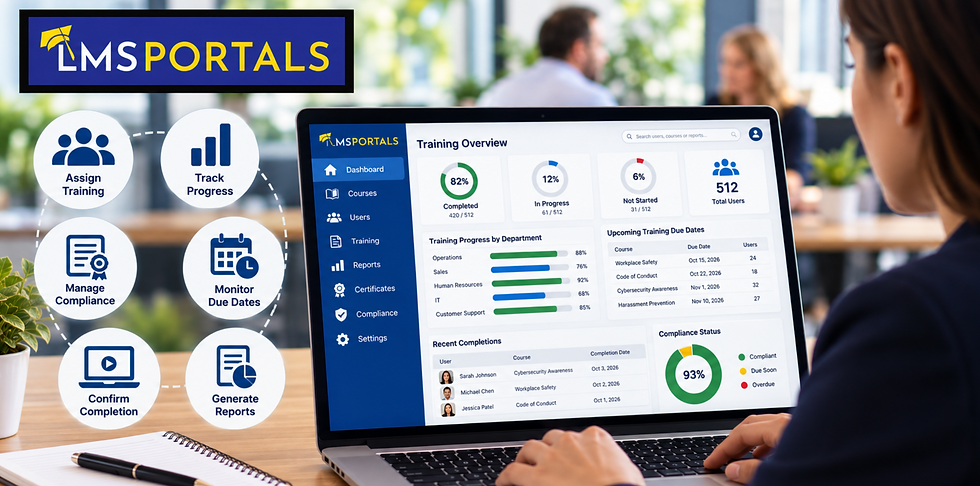
Organizations also need a platform for managing learners, organizing courses, tracking completions, and reviewing training activity.
LMS Portals brings custom course development and LMS capabilities together, helping companies address both content creation and delivery.
Multiple Branded Training Portals
LMS Portals uses a multi-tenant architecture that allows organizations to create separate branded learning environments while maintaining centralized administrative oversight.
This is particularly valuable for companies that deliver training to multiple departments, business units, geographic locations, customers, partners, or contractors.
Organizations can create focused learning experiences for different audiences without maintaining completely independent training systems.
Centralized Training Administration
Administrators can manage users, courses, and learning activity through a centralized platform.
This reduces the administrative complexity associated with distributing training materials and maintaining records across disconnected systems.
Scalable Course Libraries
Companies can begin by converting a small number of priority training materials and expand their online course libraries over time.
As new training needs emerge, additional courses can be developed and incorporated into the learning environment.
This creates a flexible foundation for ongoing employee development, compliance training, customer education, and partner enablement.
How Should Companies Get Started With Converting Training Materials?
The most effective starting point is often a review of existing training resources.
Organizations should identify materials that are frequently used, difficult to deliver consistently, or associated with important business requirements.
A small initial project can help establish development standards and demonstrate the value of online learning.
For example, converting an existing onboarding presentation or compliance training manual into a structured course can provide a practical foundation for a broader eLearning initiative.
Once the organization has established a repeatable development process, additional materials can be converted more efficiently.
Turning Existing Training Content Into a Long-Term Learning Resource
Most companies already possess valuable training knowledge.
The challenge is making that knowledge accessible, consistent, measurable, and scalable.
Converting existing presentations, manuals, policies, videos, and other resources into online courses allows organizations to extend the value of materials they have already created.
Rather than repeatedly delivering the same information through classroom sessions or distributing disconnected documents, companies can build structured learning experiences that employees and other audiences can access through an LMS.
LMS Portals helps organizations make this transition by combining custom eLearning development with a flexible, multi-tenant learning management platform.
Companies can transform existing materials into professional online courses, deliver them through branded learning environments, track learner activity, and continue expanding their training libraries as business needs evolve.
The result is more than a collection of online courses. It is a scalable training infrastructure that turns existing organizational knowledge into an ongoing resource for employee development, compliance, customer education, and business growth.
About LMS Portals
LMS Portals provides a flexible, SaaS-based multi-tenant learning management system for delivering training to employees, customers, partners, clients, and other learning audiences.
Our multi-portal architecture enables organizations to launch dedicated, branded learning environments while centrally managing users, courses, compliance, reporting, and administration.
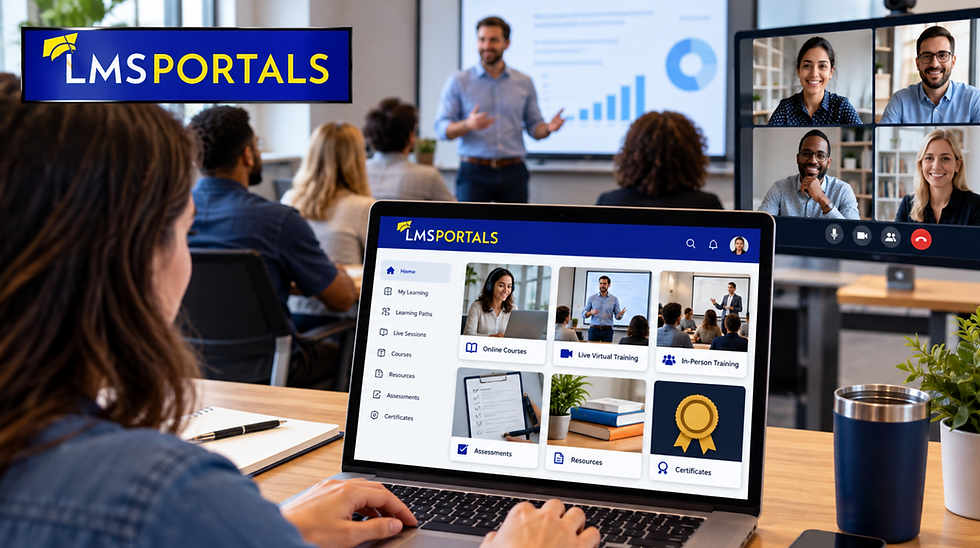
The platform includes tools for creating and delivering SCORM-compliant courses, a library of ready-made training courses, and Learning Paths for building structured training programs. LMS Portals also supports virtual instructor-led training, certification programs, automation, reporting, and social learning.
Together, these capabilities make LMS Portals a scalable solution for organizations managing training across multiple audiences.
Contact us today to get started or visit our Partner Program pages

Comments