
How Does an Online Course Academy Support Workforce Development?


Workforce development is a critical priority for organizations seeking to improve employee performance, address skills gaps, and prepare their teams for changing business requirements. As technology, job responsibilities, and industry expectations continue to evolve, organizations need practical and scalable ways to provide employees with ongoing learning opportunities.
An online course academy provides a centralized environment for delivering, managing, and tracking workforce training. By combining structured learning programs, accessible course content, and a learning management system (LMS), organizations can establish a consistent approach to employee development that supports both immediate training requirements and long-term business objectives.
For businesses, training providers, and workforce development organizations, an online course academy can serve as the foundation for building a more skilled, adaptable, and productive workforce.
What Is an Online Course Academy?
An online course academy is a digital learning environment that provides employees and other learners with access to organized training programs, courses, assessments, and professional development resources.
Unlike traditional classroom training, an online academy enables learners to access training materials from virtually any location, often at their own pace. Courses can be organized around job roles, departments, skill levels, certifications, or professional development objectives.
An online course academy typically operates through an LMS that provides the tools needed to manage course delivery, learner enrollment, progress tracking, assessments, reporting, and training records.
Common Types of Online Course Academies
Organizations can establish online academies to support a variety of workforce development initiatives, including:
Employee onboarding academies: Introduce new employees to company policies, procedures, systems, and job responsibilities.
Professional development academies: Provide ongoing opportunities to develop leadership, communication, management, and business skills.
Technical training academies: Help employees develop specialized knowledge related to technology, equipment, processes, and industry requirements.
Compliance training academies: Deliver required workplace education and maintain records of training completion.
Leadership development academies: Prepare employees for supervisory, management, and executive responsibilities.
Customer and partner training academies: Extend learning opportunities to external audiences who need product, service, or operational knowledge.
By organizing these programs within a centralized learning environment, organizations can provide a more consistent and accessible training experience.
Why Is Workforce Development Important?
Workforce development involves improving the knowledge, skills, and capabilities of employees to meet current and future organizational needs.
Effective workforce development helps organizations maintain operational performance while preparing employees for new technologies, responsibilities, and business opportunities.
Addressing Changing Workforce Requirements
Technological innovation, automation, artificial intelligence, and evolving business processes are changing the skills employees need to perform their jobs.
Organizations must continually evaluate workforce capabilities and introduce training programs that address emerging requirements.
An online course academy provides a flexible environment for introducing new learning content and updating existing programs as business needs change.
Improving Employee Engagement and Retention
Employees often value opportunities to develop their skills and advance professionally.
Organizations that provide accessible training and development programs can demonstrate a commitment to employee growth while helping individuals prepare for additional responsibilities.
A structured online academy makes professional development opportunities more visible and easier to access.
Supporting Organizational Performance
Employees who understand their responsibilities and have the skills needed to perform them are better positioned to work efficiently and consistently.
Workforce development programs can help reduce knowledge gaps, reinforce operational standards, and improve the quality of employee performance.
How Does an Online Course Academy Help Close Workforce Skills Gaps?
One of the primary objectives of workforce development is identifying and addressing differences between employees' existing capabilities and the skills required for their roles.
An online course academy allows organizations to develop targeted learning programs that address these gaps.
Delivering Role-Based Training
Organizations can organize courses around specific positions, departments, or job functions.
For example, a manufacturing company may provide training covering equipment operation, quality control, and workplace safety. A professional services organization may focus on project management, customer communication, and business technology.
Role-based training helps ensure that employees receive learning content relevant to their responsibilities.
Building Skills Through Structured Learning Paths
Learning paths provide a sequence of courses designed to help employees develop specific competencies.
An employee preparing for a supervisory position might complete courses covering communication, delegation, conflict resolution, performance management, and leadership fundamentals.
By organizing related courses into structured programs, organizations can establish clearer development expectations and help employees progress toward defined learning objectives.
Evaluating Learning Progress
An LMS can provide information about course participation, assessment results, and training completion.
Training administrators can use this information to identify employees who may need additional support and evaluate whether learning programs are achieving their educational objectives.
How Does an Online Course Academy Support Employee Onboarding?
Employee onboarding is an important component of workforce development because it establishes the foundation for employee knowledge, performance, and engagement.
Traditional onboarding programs often depend on classroom sessions, printed materials, and direct instruction from managers. These approaches can be difficult to coordinate consistently across multiple locations or growing organizations.
Standardizing the Onboarding Experience
An online academy enables organizations to create standardized onboarding programs that introduce employees to company policies, workplace expectations, operational procedures, and job responsibilities.
New employees can complete assigned courses in a defined sequence, helping ensure that important information is communicated consistently.
Reducing Administrative Requirements
An LMS can simplify onboarding administration by supporting course assignments, enrollment management, completion tracking, and reporting.
Managers and training administrators can monitor employee progress without relying entirely on manual recordkeeping.
Supporting Faster Workforce Readiness
Well-organized onboarding programs can help employees become familiar with their responsibilities more efficiently.
By making introductory training available online, organizations can provide new employees with learning resources before and during their transition into their roles.
How Does an Online Academy Support Continuous Learning?
Workforce development should continue throughout the employee lifecycle.
As responsibilities change and new technologies emerge, employees need opportunities to refresh existing knowledge and develop additional skills.
Providing Ongoing Professional Development
An online course academy can offer a centralized library of courses covering leadership, communication, digital literacy, project management, customer service, compliance, and technical skills.
Employees can access relevant learning resources as their development needs evolve.
Supporting Upskilling and Reskilling
Upskilling helps employees strengthen capabilities related to their existing responsibilities, while reskilling prepares individuals to perform different roles or functions.
An online academy can support both objectives through targeted training programs.
For example, employees may complete courses related to new software applications, artificial intelligence tools, data analysis, or emerging operational processes.
Creating a Culture of Learning
When training is readily accessible, organizations can encourage employees to view learning as an ongoing part of their professional responsibilities.
A centralized academy makes it easier to introduce new courses, promote development opportunities, and maintain consistent access to educational resources.
How Does an Online Course Academy Improve Training Accessibility?
Organizations with distributed employees, multiple locations, or varying work schedules often face challenges coordinating traditional training programs.
An online course academy helps reduce these barriers by making learning materials available through a centralized digital environment.
Supporting Remote and Distributed Workforces
Employees can access online courses from different locations without needing to attend every training session in person.
This flexibility is especially valuable for organizations with remote employees, field personnel, multiple offices, or geographically dispersed operations.
Enabling Self-Paced Learning
Self-paced courses allow employees to complete training according to their schedules, subject to organizational requirements and deadlines.
Learners can revisit materials when additional reinforcement is needed.
Providing Mobile-Friendly Training
A mobile-responsive LMS allows employees to access training through smartphones, tablets, and computers.
This can improve participation among employees who do not regularly work at a traditional desktop workstation.
How Does an LMS Help Track Workforce Development?
Delivering training is only one part of an effective workforce development strategy. Organizations also need visibility into employee participation, learning progress, and completion of required programs.
An LMS provides tools for managing and documenting these activities.
Monitoring Employee Training Progress
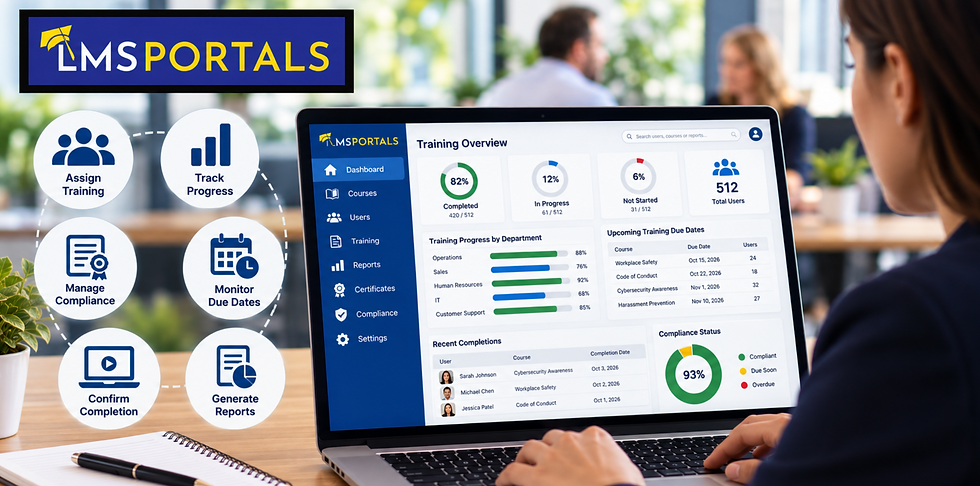
Training administrators can track course enrollments, completion status, assessment results, and learner participation.
This information helps organizations identify outstanding assignments and monitor the progress of workforce development initiatives.
Managing Certifications and Recurring Training
Many industries require employees to complete certifications, compliance courses, or periodic refresher training.
An LMS can help organizations maintain completion records, issue certificates, and manage recurring training requirements.
Supporting Training Reporting and Evaluation
LMS reporting tools provide information that organizations can use to evaluate training participation and educational outcomes.
These records can be combined with employee performance metrics, manager feedback, and operational data to assess whether training programs are contributing to business objectives.
How Does an Online Academy Support Career Development?
Career development is closely connected to workforce development because organizations benefit when employees are prepared to take on new responsibilities.
An online course academy provides a structured environment for supporting professional growth.
Preparing Employees for Advancement
Organizations can create development programs aligned with different career stages.
For example, employees interested in management positions may complete courses covering team leadership, decision-making, employee coaching, and performance management.
Supporting Internal Mobility
Training programs can help employees develop skills needed for opportunities in other departments or job functions.
This can support internal mobility while helping organizations make better use of existing workforce talent.
Strengthening Succession Planning
Leadership development programs can help organizations prepare employees for future supervisory and management positions.
By establishing defined learning paths, organizations can provide consistent development opportunities for employees with advancement potential.
How Does an Online Course Academy Help Organizations Scale Training?
As organizations grow, training requirements often become more complex.
Additional employees, locations, departments, and business units can increase the administrative effort required to coordinate learning programs.
Centralizing Training Content
An online academy enables organizations to maintain a centralized library of training materials.
Courses can be created once and assigned to multiple groups of learners, reducing the need to repeatedly develop or distribute the same content.
Maintaining Consistent Training Standards
Centralized course management helps organizations provide consistent learning materials across different teams and locations.
When policies, procedures, or operational requirements change, training content can be updated to reflect current expectations.
Supporting Multiple Training Audiences
Organizations that serve multiple clients, departments, or workforce groups may benefit from a multi-tenant LMS.
Multi-tenant platforms enable administrators to manage separate learning environments while maintaining centralized oversight of the broader training infrastructure.
This approach is particularly valuable for training companies, professional associations, workforce development providers, and organizations with multiple business units.
What Are the Benefits of Working with LMS Portals?
LMS Portals provides a cloud-based, multi-tenant learning management platform designed to help organizations create, deliver, and manage online training programs.
For businesses, training providers, and workforce development organizations, LMS Portals offers a flexible foundation for establishing online course academies without the complexity of developing and maintaining a proprietary LMS.
Launch Branded Online Course Academies
LMS Portals enables organizations to establish branded learning portals that provide learners with a dedicated environment for accessing courses and training resources.
Organizations can create learning experiences aligned with their brand, audience, and training objectives.
This makes the platform suitable for internal employee academies as well as external training programs delivered to clients, partners, and other audiences.
Manage Multiple Academies from One Platform
One of the key advantages of LMS Portals is its multi-tenant architecture.
Organizations can create separate training portals for different clients, departments, business units, or learner groups while managing the overall environment through a centralized platform.
Each portal can provide a distinct learning experience with its own courses, users, and administrative requirements.
This structure is especially valuable for workforce development providers and training companies serving multiple organizations.
Deliver a Wide Range of Online Courses
LMS Portals supports online training programs covering employee onboarding, compliance, professional development, technical skills, leadership, and other workforce development topics.
Organizations can use SCORM-compatible eLearning courses and other supported learning resources to build training programs aligned with their objectives.
This flexibility enables organizations to establish course libraries that can expand as workforce training requirements evolve.
Simplify Training Administration
LMS Portals provides administrative capabilities for managing learners, organizing courses, assigning training, and monitoring completion.
These tools help reduce the manual effort associated with delivering and coordinating training programs.
Administrators can maintain visibility into learner activity while providing employees with an organized environment for completing their courses.
Track Learning Progress and Training Completion
LMS Portals provides reporting and tracking capabilities that help organizations monitor training participation and completion.
Administrators can review learner progress, maintain training records, and support documentation requirements associated with compliance and professional development programs.
These capabilities are valuable for organizations that need to demonstrate employee participation in required training.
Support Course Development and eLearning Initiatives
Beyond providing the LMS infrastructure, LMS Portals can work with organizations that need assistance developing or converting training content into online learning experiences.
This may include transforming existing presentations, documents, and instructional materials into structured eLearning courses.
For organizations without extensive internal instructional design resources, outsourced course development can provide a practical way to build and expand an online academy.
Build a Scalable Workforce Training Business
For training providers, consultants, and workforce development organizations, LMS Portals can serve as the technology foundation for delivering training services to multiple clients.
The multi-tenant platform enables providers to establish separate branded academies, organize client-specific training programs, and manage multiple learning environments.
This model can support recurring training services, client-specific course libraries, compliance programs, and ongoing professional development offerings.
As providers add clients or expand their training catalogs, they can build upon an established LMS infrastructure rather than developing a separate platform for each engagement.
Focus on Training Outcomes Instead of LMS Technology
Building and maintaining a proprietary learning management system requires ongoing investments in software development, hosting, security, maintenance, and technical support.
Working with LMS Portals allows organizations to leverage an existing cloud-based LMS platform.
This enables training teams and workforce development providers to concentrate more of their resources on course content, learner engagement, client relationships, and training outcomes.
How Can Organizations Get Started with an Online Course Academy?
Establishing an online course academy begins with defining the organization's workforce development objectives.
Organizations should identify their intended learners, required skills, existing training resources, and the outcomes they want to achieve.
Identify Workforce Training Priorities
The first step is determining which training programs will provide the greatest value.
These may include employee onboarding, mandatory compliance training, technical skills development, leadership programs, or professional education.
Organize Courses into Learning Programs
Once training priorities are established, organizations can organize existing and new courses into categories and structured learning paths.
This creates a more intuitive learning experience and helps employees understand which programs are relevant to their responsibilities.
Select a Scalable LMS Platform
The LMS should provide the administrative capabilities, learner experience, content compatibility, and scalability needed to support the academy.
Organizations serving multiple clients or departments should also evaluate multi-tenant functionality and portal management capabilities.
Launch, Measure, and Expand
Organizations can begin with a focused set of courses and expand the academy as training needs evolve.
By reviewing participation, completion, assessment results, and workforce performance indicators, administrators can identify opportunities to improve their programs.
Over time, the academy can develop into a comprehensive resource for employee learning and professional development.
Summary
An online course academy provides organizations with a practical and scalable approach to workforce development.
By centralizing learning resources, organizing structured training programs, and providing visibility into employee progress, online academies help organizations address skills gaps, improve training consistency, and create opportunities for continuous professional development.
As workforce requirements continue to evolve, organizations need training infrastructure that can adapt to new technologies, changing job responsibilities, and expanding learning audiences.
LMS Portals provides the multi-tenant LMS technology and eLearning development support organizations need to establish branded online course academies, manage workforce training programs, and expand their learning initiatives.
Whether supporting internal employee development or delivering training services to multiple clients, LMS Portals helps organizations build a scalable foundation for workforce learning and long-term growth.
About LMS Portals
LMS Portals provides a flexible, SaaS-based multi-tenant learning management system for delivering training to employees, customers, partners, clients, and other learning audiences.
Our multi-portal architecture enables organizations to launch dedicated, branded learning environments while centrally managing users, courses, compliance, reporting, and administration.
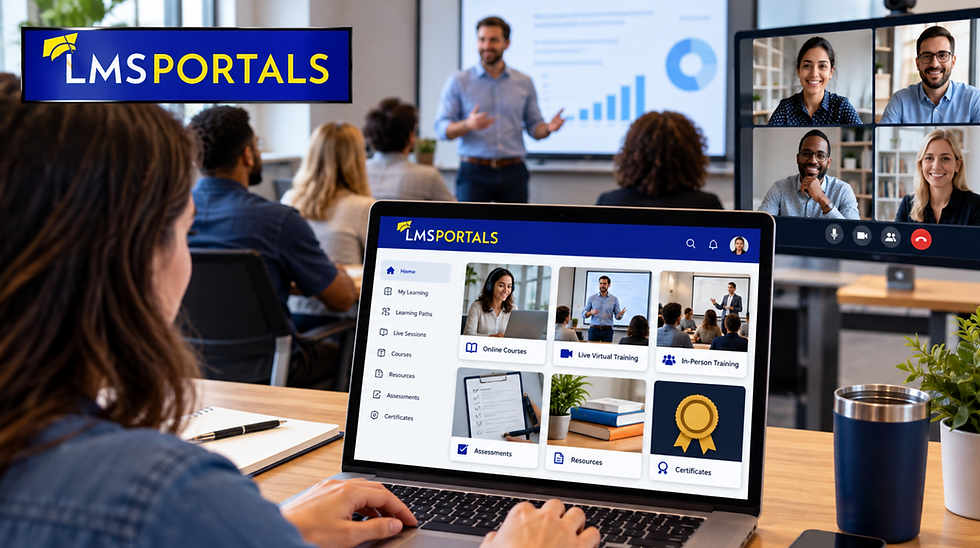
The platform includes tools for creating and delivering SCORM-compliant courses, a library of ready-made training courses, and Learning Paths for building structured training programs. LMS Portals also supports virtual instructor-led training, certification programs, automation, reporting, and social learning.
Together, these capabilities make LMS Portals a scalable solution for organizations managing training across multiple audiences.
Contact us today to get started or visit our Partner Program pages

Comments