
SCORM Hosting for Multi-Tenant LMS Platforms: Benefits and Architecture

In the rapidly evolving eLearning ecosystem, the ability to deliver scalable, flexible, and standardized learning experiences is key. One of the core technical standards driving this capability is SCORM (Sharable Content Object Reference Model). For multi-tenant LMS platforms—where a single LMS instance serves multiple clients or organizations—the challenge becomes how to efficiently manage and deliver SCORM content across tenants without redundancy, complexity, or performance hits.
This article breaks down the benefits of SCORM hosting in multi-tenant LMS environments and outlines the architectural approaches that make it work.
What is SCORM?
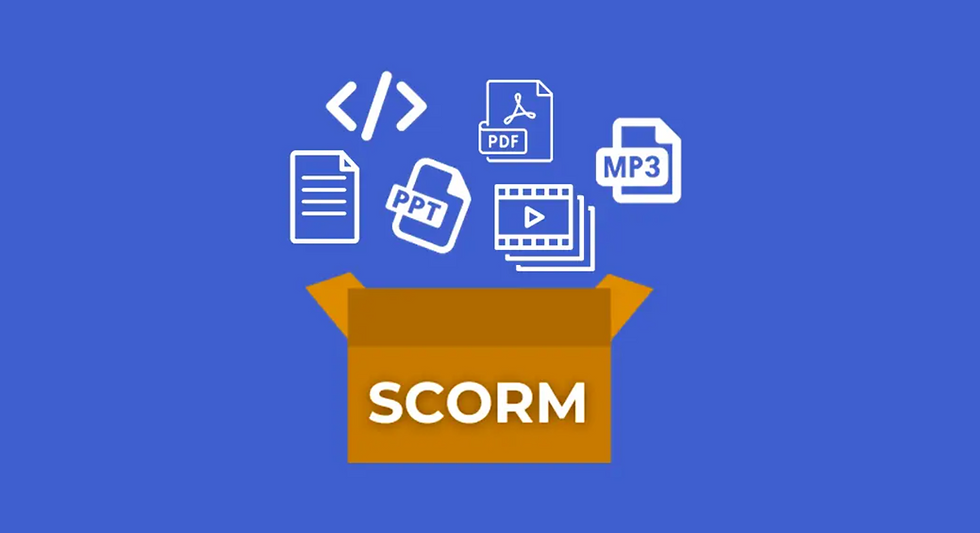
SCORM is a set of technical standards developed by ADL (Advanced Distributed Learning) that defines how eLearning content communicates with LMS platforms. A SCORM package includes HTML, JavaScript, and media files, wrapped in a standardized XML manifest (imsmanifest.xml) that tells the LMS how to launch and track the course.
Key SCORM features:
Reusability of content
Consistent tracking (completion, score, progress)
Launching and navigation control
Data persistence (bookmarks, scores)
SCORM content typically runs in a browser and communicates with the LMS via JavaScript API calls defined by the SCORM spec (1.2 or 2004).
What is a Multi-Tenant LMS?
A multi-tenant LMS is a single software instance that serves multiple clients (tenants). Each tenant is isolated from others and can have:
Custom branding
Independent user and course management
Separate data storage and reporting
Custom integrations or access controls
Benefits of multi-tenancy:
Centralized codebase and updates
Lower infrastructure cost
Streamlined management
Scalability for SaaS LMS vendors
But this architecture complicates the management of SCORM content, especially if each tenant needs access to different (or the same) SCORM courses.
The SCORM Hosting Dilemma in Multi-Tenant LMSs
SCORM content is static, meaning it doesn’t scale easily like a simple text-based course.
Each course package is a set of files, and LMSs need to:
Launch them reliably
Track learner progress per user, per tenant
Prevent duplication or content drift
Here’s where the hosting architecture becomes critical. LMS vendors have two primary options:
Option 1: Local SCORM Hosting per Tenant
Each tenant gets its own instance of the SCORM package.
Pros:
Full isolation
Customizable per tenant
Easier to comply with tenant-specific licensing
Cons:
Massive storage duplication
Version management headaches
Hard to scale
Inefficient use of resources
Option 2: Centralized SCORM Hosting
One master version of each SCORM package is hosted centrally and shared across tenants.
Pros:
Storage efficiency
Streamlined updates
Simplified maintenance
Easier content licensing compliance tracking
Cons:
Requires complex multi-tenant tracking logic
Risk of data leakage if improperly isolated
Needs advanced architecture
Benefits of Centralized SCORM Hosting for Multi-Tenant LMSs
Centralized SCORM hosting is the more scalable solution, especially for LMS platforms serving hundreds of clients. Here’s why:
1. Reduced Storage and Bandwidth Costs
Instead of storing the same 200MB SCORM file for 50 tenants, you store it once and serve it many times. Multiply this across hundreds of courses and tenants, and the storage and CDN savings become enormous.
2. Simplified Content Version Control
Updating SCORM courses becomes centralized. You update the master course once, and all tenants using that version see the change instantly—no need to track and replace dozens of outdated copies.
3. Faster Course Deployment
New clients can be onboarded faster because content doesn’t need to be copied. Assign the centralized SCORM package, configure permissions, and they’re good to go.
4. Improved Analytics
With centralized hosting, it's easier to aggregate usage data and learner analytics across tenants, while still filtering per client. This enables insights like:
Course effectiveness by industry
Drop-off rates across organizations
Common failure points in assessments
5. Better Licensing and Compliance Management
Some SCORM content is licensed per-seat or per-organization. Centralized control allows LMS vendors to enforce usage limits and generate compliance reports for publishers.
6. More Efficient Caching and CDN Use
When many learners access the same SCORM course, shared caching (via a CDN or edge server) improves loading speed and reduces load on origin servers.
Key Architectural Considerations
Designing a robust centralized SCORM hosting system in a multi-tenant LMS requires careful planning around isolation, tracking, and performance. Here are the critical components:
1. Course Repository and Metadata Management
A centralized repository should:
Store SCORM files in a structured, versioned format (e.g., /courses/[course_id]/[version]/)
Maintain metadata like title, author, tags, version, status, and licensing
Map courses to tenants through access control logic
2. Dynamic SCORM Player Initialization
Each SCORM course launch must:
Inject tenant-specific context
Assign a unique session ID
Initialize SCORM API endpoints dynamically (e.g., LMSInitialize())
Route API calls to a multi-tenant-aware backend
3. Multi-Tenant SCORM Data Tracking
This is one of the hardest parts.
Your LMS must:
Log SCORM data (cmi.core.lesson_status, cmi.core.score, etc.) per user, per session, per tenant
Prevent one tenant’s learners from accessing or modifying another tenant’s records
Support resume/bookmark functionality (cmi.core.lesson_location)
A typical approach is to use a SCORM data adapter layer that proxies API calls (e.g., LMSSetValue) to a multi-tenant tracking service.
4. Secure Delivery and Access Control
Prevent unauthorized access to SCORM files using:
Tokenized URLs with short TTLs
Signed URLs from cloud storage (e.g., AWS S3 + CloudFront)
Server-side launch verification (to enforce course ownership per tenant)
Also, ensure that:
File download is disabled
Tenant A cannot embed courses licensed only to Tenant B
5. SCORM Launch and Tracking API
Use a server-side SCORM launch endpoint like:
POST /api/launch/scorm
Body: {
  course_id: "abc123",
  user_id: "u456",
  tenant_id: "t789"
}
This endpoint:
Validates access rights
Creates a new SCORM session
Returns a signed SCORM player launch URL
Once the course is completed, the SCORM player sends tracking data to:
POST /api/scorm/track
Body: {
  session_id: "s789",
  key: "cmi.core.score.raw",
  value: "87"
}
6. Scalable Infrastructure and Caching
Consider deploying:
SCORM content on a CDN (Content Delivery Network) like Cloudflare or AWS CloudFront
SCORM API endpoints as stateless microservices
A caching layer (e.g., Redis) for session tokens and course metadata
Asynchronous data ingestion for analytics (Kafka or similar)
This ensures fast response times even under heavy concurrent access.
Optional: SCORM Proxy or Middleware Layer
Some LMS platforms introduce a SCORM middleware—a service that:
Manages SCORM sessions
Proxies and logs API calls
Handles SCORM versions and backward compatibility quirks
This layer allows decoupling the SCORM tracking logic from the core LMS and simplifies upgrades or spec changes.
Diagram: SCORM Hosting Architecture for Multi-Tenant LMS
Let’s outline a simplified architecture:
1. LMS Frontend (Multi-Tenant UI)
Launches courses via a secure endpoint
2. SCORM Hosting Service
Serves content from a centralized repository (e.g., S3 + CloudFront)
3. SCORM API Adapter
Handles LMSInitialize, LMSSetValue, LMSCommit, etc.
Routes calls per session, tenant, and user
4. Tracking Database
Stores SCORM runtime data scoped by tenant and session
5. Analytics Engine (Optional)
Aggregates SCORM tracking data
Exposes dashboards and reports
6. Auth & Access Control
Governs course licensing, tenant access, and session verification
Key Challenges and How to Solve Them
Challenge | Solution |
Session security | Use signed tokens and time-limited URLs |
Cross-tenant data isolation | Always scope by tenant ID in data models and API queries |
Version drift | Implement version locking and migration support in the SCORM repo |
SCORM player bugs | Use a stable open-source SCORM player like Rustici’s or custom wrapper |
Legacy SCORM formats | Normalize SCORM 1.2 and 2004 to a unified backend tracking model |
Final Thoughts
SCORM hosting in multi-tenant LMS platforms is both a technical challenge and an opportunity. Done wrong, it leads to duplication, data leakage, and operational pain. Done right, it delivers scalable, high-performance eLearning experiences across diverse client organizations—while keeping operations tight and costs low.
For LMS vendors and architects, the key lies in building a secure, efficient, and flexible SCORM hosting architecture that decouples content delivery from tenant-specific tracking and access. Centralized hosting, when implemented with proper controls, is not just a technical upgrade—it’s a strategic advantage.
About LMS Portals
At LMS Portals, we provide our clients and partners with a mobile-responsive, SaaS-based, multi-tenant learning management system that allows you to launch a dedicated training environment (a portal) for each of your unique audiences.
The system includes built-in, SCORM-compliant rapid course development software that provides a drag and drop engine to enable most anyone to build engaging courses quickly and easily.
We also offer a complete library of ready-made courses, covering most every aspect of corporate training and employee development.
If you choose to, you can create Learning Paths to deliver courses in a logical progression and add structure to your training program. The system also supports Virtual Instructor-Led Training (VILT) and provides tools for social learning.
Together, these features make LMS Portals the ideal SaaS-based eLearning platform for our clients and our Reseller partners.
Contact us today to get started or visit our Partner Program pages


Comments