
Understanding Ontario's Worker Health & Safety Awareness Program


Every worker deserves to return home safely at the end of the day. In Ontario, workplace health and safety is not only a moral responsibility but also a legal obligation. One of the cornerstones of this commitment is the Worker Health & Safety Awareness Program, which helps ensure employees understand their rights, responsibilities, and the fundamental principles of maintaining a safe workplace.
For employers, this mandatory awareness training represents far more than a regulatory requirement. It establishes the foundation for a strong safety culture, reduces workplace incidents, improves employee confidence, and demonstrates a commitment to compliance. Organizations that deliver this training consistently and effectively are better positioned to protect their employees while reducing operational and legal risks.
As businesses grow, however, managing mandatory training across multiple departments, locations, or client organizations can become increasingly complex. Modern learning management systems simplify this process by centralizing training delivery, tracking completion records, and providing documentation when it matters most.
What Is Ontario's Worker Health & Safety Awareness Program?
Ontario's Worker Health & Safety Awareness Program is mandatory awareness training required under the Occupational Health and Safety Act (OHSA). The program ensures that workers receive basic information about workplace health and safety before or shortly after beginning employment.
The goal is straightforward: every employee should understand the basic principles that help prevent workplace injuries and illnesses, regardless of industry or job title.
Unlike industry-specific safety certifications, awareness training establishes a universal foundation applicable to virtually every workplace across Ontario. Whether an employee works in manufacturing, healthcare, construction, education, retail, logistics, professional services, or hospitality, understanding workplace safety responsibilities is essential.
Employers are responsible for ensuring workers complete the required awareness training and for maintaining records demonstrating compliance.
Why This Training Matters
Many workplace injuries occur because employees are unaware of hazards, uncertain about reporting procedures, or unfamiliar with their legal rights and responsibilities.
Health and safety awareness training helps employees understand:
Their rights under Ontario law
Their responsibilities for working safely
Employer responsibilities
How hazards are identified and controlled
The importance of reporting unsafe conditions
Where to obtain additional safety information
When employees understand these principles from day one, organizations create stronger safety cultures that encourage communication, accountability, and proactive risk management.
The Three Fundamental Worker Rights
One of the most important concepts covered in Ontario's health and safety awareness training is the three fundamental worker rights established under the Occupational Health and Safety Act.
The Right to Know
Workers have the right to know about hazards in their workplace.
This includes receiving information about:
Workplace hazards
Safe work procedures
Required protective equipment
Emergency procedures
Hazardous materials
Health and safety policies
Knowledge is the first line of defense against workplace injuries.
The Right to Participate
Employees have the right to participate in improving workplace health and safety.
Participation may include:
Reporting hazards
Making safety suggestions
Serving on health and safety committees
Participating in inspections
Cooperating during investigations
Successful safety programs rely on active employee involvement rather than top-down enforcement alone.
The Right to Refuse Unsafe Work
Workers may refuse work they reasonably believe could endanger themselves or others under circumstances outlined by Ontario law.
Understanding this right helps employees recognize serious hazards while ensuring employers follow appropriate investigation procedures before work resumes.
This right reinforces the principle that productivity should never come at the expense of worker safety.
Employer Responsibilities
Ontario employers carry significant responsibilities under the Occupational Health and Safety Act.
These responsibilities include:
Providing a safe workplace
Supplying required health and safety training
Informing workers about hazards
Maintaining equipment
Developing safe work procedures
Providing appropriate personal protective equipment (PPE)
Supervising employees adequately
Investigating incidents
Maintaining health and safety policies where required
Employers must also ensure supervisors understand and fulfill their own legal responsibilities.
A proactive approach to safety not only improves compliance but also strengthens employee trust and organizational reputation.
Worker Responsibilities
Health and safety is a shared responsibility.
Workers are expected to:
Follow safe work procedures
Use equipment properly
Wear required PPE
Report hazards promptly
Report workplace injuries
Cooperate with safety policies
Avoid unsafe behavior
Participate in required training
When employees understand these expectations from the start, organizations experience fewer misunderstandings and stronger overall compliance.
Supervisor Responsibilities
Supervisors play an essential role in maintaining safe workplaces.
Their responsibilities generally include:
Ensuring workers follow safe procedures
Advising employees of hazards
Providing appropriate instruction
Enforcing safety rules
Taking reasonable precautions to protect workers
Responding appropriately to reported hazards
Supervisors often serve as the link between organizational safety policies and day-to-day workplace operations.
Common Topics Covered in Awareness Training
Although organizations may customize their delivery methods, Ontario's Worker Health & Safety Awareness Program typically introduces learners to several core concepts.
These include:
Understanding Workplace Hazards
Workers learn to recognize:
Physical hazards
Chemical hazards
Biological hazards
Ergonomic risks
Psychological hazards
Environmental dangers
Recognizing hazards early allows workers to take appropriate action before injuries occur.
Workplace Violence and Harassment
Ontario employers are responsible for addressing workplace violence and harassment.
Awareness training helps employees understand:
What constitutes workplace violence
What constitutes workplace harassment
Reporting procedures
Employer obligations
Available support resources
Creating respectful workplaces contributes to both safety and employee wellbeing.
Reporting Incidents
Employees should understand:
When incidents must be reported
How hazards are documented
Who receives reports
Why prompt reporting matters
Even minor incidents can reveal larger safety issues requiring corrective action.
Internal Responsibility System
Ontario's health and safety framework is built upon the Internal Responsibility System (IRS), which recognizes that everyone in the workplace shares responsibility for maintaining safe working conditions.
Rather than relying solely on regulators, employers, supervisors, and workers all contribute to identifying and controlling hazards.
This collaborative approach has become one of the defining principles of Ontario workplace safety.
Benefits Beyond Compliance
Many organizations initially implement awareness training simply because it is required.
However, the long-term business benefits often extend far beyond legal compliance.
Effective health and safety awareness programs can help organizations:
Reduce workplace injuries
Lower workers' compensation claims
Improve employee morale
Increase productivity
Reduce absenteeism
Improve onboarding consistency
Strengthen organizational culture
Demonstrate due diligence
Improve regulatory readiness
Safety education becomes an investment rather than simply a compliance obligation.
Challenges of Managing Mandatory Training
While the training itself is relatively straightforward, managing it consistently can become increasingly difficult as organizations grow.
Common challenges include:
Employee Turnover
Organizations with frequent hiring must ensure new employees complete mandatory training promptly.
Manual tracking can quickly become overwhelming.
Multiple Locations
Companies operating across Ontario often struggle to maintain consistent training standards across different offices, facilities, or job sites.
Recordkeeping
During inspections or audits, employers may need to demonstrate who completed required awareness training and when.
Paper records and spreadsheets can be difficult to maintain accurately over time.
Refresher Training
Although the awareness program may not require scheduled renewals in every circumstance, many employers choose to provide refresher education as part of broader health and safety initiatives.
Managing these ongoing learning activities requires organized tracking.
How Learning Management Systems Simplify Compliance
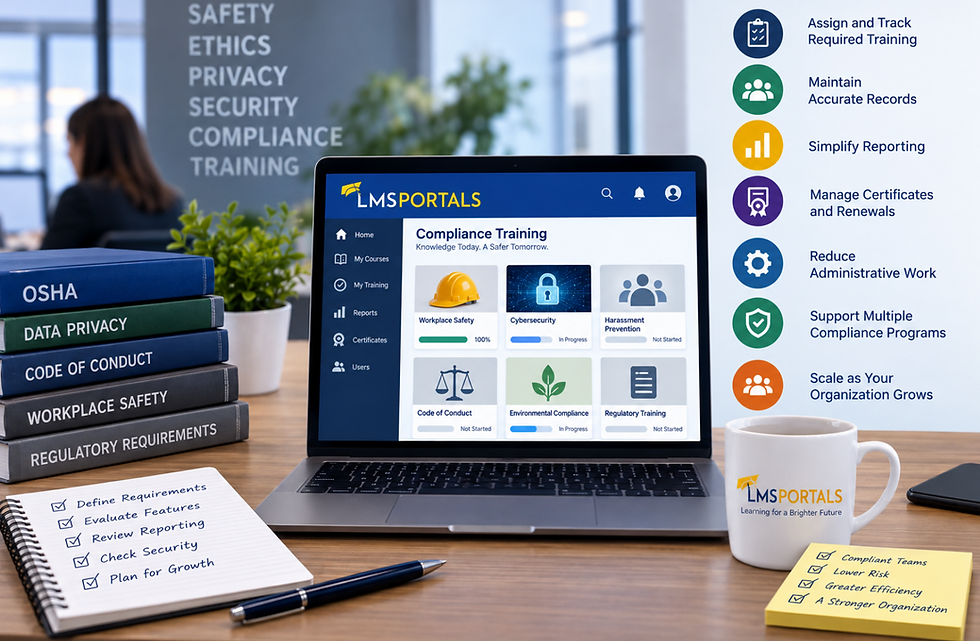
A Learning Management System (LMS) transforms mandatory training from a manual administrative burden into an efficient, scalable process.
Instead of relying on emails, spreadsheets, or paper records, organizations can manage every aspect of training through a centralized platform.
Key advantages include:
Automated Enrollment
New employees can automatically receive required awareness training during onboarding.
This reduces delays and ensures consistent compliance.
Online Learning
Workers can complete training from virtually any location using computers, tablets, or smartphones.
This flexibility supports remote, hybrid, field-based, and multi-site workforces.
Completion Tracking
Administrators can instantly view:
Training status
Completion dates
Outstanding assignments
Individual learner progress
Real-time reporting eliminates uncertainty.
Digital Certificates
Employees receive certificates upon successful completion.
Organizations maintain permanent electronic records for future reference.
Audit Readiness
Should regulators request documentation, administrators can quickly produce accurate completion records rather than searching through paper files.
This significantly reduces administrative stress during inspections.
Why Organizations Choose LMS Portals
As mandatory workplace training expands across organizations, businesses need learning technology that is both powerful and easy to manage.
LMS Portals provides a cloud-based learning management system designed to simplify compliance training while supporting organizations of every size—from a single business to associations, franchises, staffing firms, consultants, and enterprise organizations managing multiple branded learning environments.
Key benefits include:
Unlimited Learners
Organizations can train their entire workforce without worrying about traditional per-user licensing models, making growth more predictable and cost-effective.
Branded Learning Portals
Companies can create customized learning environments that reflect their own branding, business units, clients, or departments while managing everything from one centralized platform.
Simple Compliance Tracking
Administrators can easily monitor mandatory course completion, generate reports, issue certificates, and maintain organized training records that support audit readiness.
Flexible Course Delivery
Organizations can deliver internally developed training, third-party compliance courses, SCORM content, videos, documents, quizzes, and learning paths from one platform.
Anywhere, Anytime Access
Employees can complete required training from the office, home, or job site using virtually any internet-connected device.
Scalable for Growing Organizations
Whether training 25 employees or thousands of learners across multiple locations, LMS Portals provides a scalable solution that grows alongside organizational needs.
Building a Strong Safety Culture
Compliance training should not be viewed as a one-time onboarding requirement.
The most successful organizations reinforce safety throughout the employee lifecycle by combining mandatory awareness training with ongoing education covering topics such as ergonomics, workplace violence prevention, emergency preparedness, mental health, hazard communication, and leadership responsibilities.
When safety becomes an ongoing conversation rather than an annual obligation, employees remain engaged, hazards are reported earlier, and organizations experience stronger long-term outcomes.
Technology makes this continuous learning approach practical by delivering the right training to the right employees at the right time while maintaining accurate records automatically.
Final Thoughts
Ontario's Worker Health & Safety Awareness Program establishes the foundation for safer workplaces by ensuring every employee understands their rights, responsibilities, and role in preventing workplace injuries.
For employers, meeting this requirement is about much more than satisfying legal obligations. It represents an opportunity to build a proactive safety culture, improve operational performance, and protect the organization's most valuable asset—its people.
As workforces become larger, more distributed, and increasingly digital, learning management systems make mandatory safety training easier to deliver, manage, and document. With automated enrollment, comprehensive reporting, branded learning environments, and scalable compliance management, LMS Portals helps organizations streamline mandatory training while reducing administrative effort and supporting long-term workplace safety success.
About LMS Portals
At LMS Portals, we provide our clients and partners with a mobile-responsive, SaaS-based, multi-tenant learning management system that allows you to launch a dedicated training environment (a portal) for each of your unique audiences.
The system includes built-in, SCORM-compliant rapid course development software that provides a drag and drop engine to enable most anyone to build engaging courses quickly and easily.
We also offer a complete library of ready-made courses, covering most every aspect of corporate training and employee development.
If you choose to, you can create Learning Paths to deliver courses in a logical progression and add structure to your training program. The system also supports Virtual Instructor-Led Training (VILT) and provides tools for social learning.
Together, these features make LMS Portals the ideal SaaS-based eLearning platform for our clients and our Reseller partners.
Contact us today to get started or visit our Partner Program pages


Comments