
How Can Hotels Train Housekeepers on Bloodborne Pathogens?


Hotel housekeeping employees play a critical role in maintaining clean, comfortable, and safe environments for guests. However, their responsibilities can expose them to workplace hazards that are not always immediately visible.
Among these hazards is potential exposure to bloodborne pathogens, infectious microorganisms that can cause serious illnesses when transmitted through certain types of contact with infected blood or other potentially infectious materials.
From handling soiled linens to cleaning bathrooms, removing trash, and responding to unexpected incidents in guest rooms, housekeepers may encounter situations involving blood or contaminated objects. Without appropriate training, employees may not recognize these hazards or understand the precautions necessary to protect themselves.
Bloodborne pathogens training for hotel housekeepers helps hospitality organizations reduce workplace risks, establish consistent safety procedures, and address applicable Occupational Safety and Health Administration (OSHA) requirements.
For hotel operators managing multiple properties, departments, and shifts, delivering effective training requires a structured, accessible, and measurable approach. Online training programs supported by a learning management system (LMS) can make this process significantly easier.
Why Is Bloodborne Pathogens Training Important for Hotel Housekeepers?
Understanding Bloodborne Pathogens in Hospitality Environments
Bloodborne pathogens are disease-causing microorganisms found in human blood.
Three commonly discussed pathogens include:
Hepatitis B (HBV): A virus that affects the liver and can cause chronic infection and serious liver disease.
Hepatitis C (HCV): A virus that can lead to long-term liver damage and other health complications.
Human Immunodeficiency Virus (HIV): A virus that attacks the immune system and, without effective treatment, can progress to AIDS.
These pathogens are transmitted through specific exposure routes, including needlestick injuries and contact between infectious blood and broken skin or mucous membranes.
They are not transmitted through ordinary casual contact, such as shaking hands or being near an infected individual.
For housekeepers, the primary concern is accidental occupational exposure while performing cleaning and maintenance responsibilities.
Common Exposure Risks in Hotel Housekeeping
Housekeeping employees work in environments where unexpected hazards may be present.
Potential exposure situations include discovering used needles in guest rooms, encountering bloodstained bedding, cleaning surfaces contaminated with blood, handling waste containing sharp objects, or responding to an injury involving a guest or employee.
For example, a housekeeper changing bedsheets could discover a concealed sharp object. Another employee might encounter broken glass contaminated with blood while emptying a bathroom wastebasket.
These situations demonstrate why general cleaning experience alone is insufficient.
Employees need specific instruction on recognizing potential exposure hazards, avoiding unsafe contact, notifying supervisors, and following established procedures.
What Does OSHA Require for Hotel Bloodborne Pathogens Training?
Understanding OSHA's Bloodborne Pathogens Standard
OSHA's Bloodborne Pathogens Standard, 29 CFR 1910.1030, establishes requirements for employers whose workers have reasonably anticipated occupational exposure to blood or other potentially infectious materials.
For hotels, applicability depends on employees' actual job responsibilities and anticipated exposure risks. Not every housekeeping position automatically falls under the standard.
However, when occupational exposure is reasonably anticipated, employers must implement applicable protections, including training, exposure control procedures, appropriate protective equipment, and other required safeguards.
Under the standard, covered employees must receive training at the time of initial assignment to tasks involving occupational exposure and at least annually thereafter.
Additional training is required when changes in tasks or procedures introduce new exposure risks.
Training must be provided during working hours, at no cost to employees, and in language and vocabulary appropriate to their educational level and literacy.
Developing an Exposure Control Plan
For covered employees, OSHA requires a written Exposure Control Plan identifying occupational exposure risks and measures for minimizing them.
A hotel's plan should address relevant housekeeping activities, including handling contaminated laundry, responding to blood spills, managing contaminated sharps, and reporting exposure incidents.
The plan should identify employee responsibilities, appropriate protective measures, and procedures for obtaining medical evaluation following an exposure.
Employers must review and update required Exposure Control Plans at least annually and when relevant tasks or procedures change.
Training should explain the plan and how employees can access it, rather than simply asking workers to acknowledge that it exists.
What Should Hotel Housekeepers Learn About Bloodborne Pathogens?
Recognizing Potentially Contaminated Materials
The first objective of an effective training program is teaching employees to recognize situations that may involve infectious materials.
Housekeepers should understand that blood contamination is not always obvious and that potentially hazardous objects may be concealed in bedding, towels, waste containers, or other guest-room materials.
Training should also explain that not every bodily fluid is automatically classified as potentially infectious under OSHA's Bloodborne Pathogens Standard. The nature of the material and exposure circumstances matter.
Employees should learn when to stop work, isolate a potentially hazardous area, and request assistance from appropriately trained personnel.
Using Personal Protective Equipment Correctly
Personal protective equipment (PPE) is an essential component of bloodborne pathogens prevention.
Depending on the task and anticipated exposure, appropriate PPE may include disposable gloves, protective clothing, eye protection, or face protection.
Training should explain how employees select, put on, remove, and dispose of protective equipment without contaminating themselves.
Employees must also understand that gloves do not eliminate the need for hand hygiene or safe work practices.
Hotel management should ensure that required protective equipment is readily available and that employees understand its limitations.
Handling Contaminated Laundry and Sharps
Hotel housekeepers routinely handle large quantities of linens and waste, creating opportunities for accidental contact with hazardous materials.
Training should emphasize avoiding unnecessary handling of contaminated laundry, minimizing agitation, and using appropriate containment.
Employees should never reach blindly into waste containers or use their hands to retrieve potentially contaminated needles or broken glass.
Contaminated sharps must be managed using approved procedures and suitable puncture-resistant containers. Employees should understand which tasks they are authorized and trained to perform.
How Should Hotels Teach Housekeepers to Respond to Blood Spills?
Establishing Safe Cleanup Procedures
Blood spill response is one of the most practical subjects in housekeeping safety training.
Employees should be taught to recognize a spill, prevent others from entering the affected area, notify the appropriate personnel, and determine whether they are authorized and equipped to perform cleanup.
For trained and designated employees, procedures generally involve wearing appropriate PPE, safely containing and removing contamination, cleaning the affected surface, and applying an appropriate disinfectant according to its instructions.
The disinfectant must be suitable for the hazard and surface, and employees must follow the required contact time.
The CDC emphasizes prompt cleanup, appropriate PPE, and effective cleaning and disinfection practices when addressing blood or potentially infectious materials.
Responding to Accidental Exposure
Employees also need to understand what to do if an exposure occurs.
Training should cover immediate first aid, prompt reporting, and the employer's procedures for obtaining confidential medical evaluation and follow-up.
A needlestick injury, blood splash to the eyes, or contact with non-intact skin should never be dismissed as a routine housekeeping incident.
Employees should know whom to contact, how to report an incident, and why timely medical assessment matters.
Hotels should reinforce that reporting an exposure is an essential safety responsibility and that employees should not delay seeking assistance.
How Can Hotels Deliver Effective Bloodborne Pathogens Training?
Using Online Training for Consistent Instruction
Traditional instructor-led training can be difficult to coordinate in hotels operating around the clock.
Housekeeping employees may work different shifts, speak different languages, and have limited availability for scheduled classroom sessions.
Online training allows employees to complete structured learning modules at appropriate times without requiring every employee to attend the same session.
Courses can combine explanations, photographs, practical examples, knowledge checks, and assessments.
However, online learning should be integrated with workplace-specific instruction, demonstrations, and opportunities to ask questions. For employees covered by OSHA's standard, training must include an opportunity for interactive questions and answers with a knowledgeable person.
A learning management system can deliver and document online coursework while supervisors provide hands-on instruction and address property-specific procedures.
Incorporating Realistic Hotel Housekeeping Scenarios
Training becomes more relevant when it reflects situations employees may actually encounter.
For example, a course could present a scenario in which a housekeeper discovers a used needle beneath a guest-room mattress.
Employees would be asked to identify the safest response, including avoiding direct contact, securing the area, and notifying designated personnel.
Another scenario could involve bloodstained towels found during bathroom cleaning.
Interactive exercises encourage employees to apply safety principles rather than simply memorize definitions.
This approach also helps supervisors identify misunderstandings before they contribute to unsafe workplace practices.
How Often Should Hotels Provide Bloodborne Pathogens Training?
Initial Training and Annual Refresher Courses
For employees covered by OSHA's Bloodborne Pathogens Standard, training must occur before or at initial assignment to tasks involving occupational exposure and at least annually thereafter.
Annual training must take place within one year of the previous training.
Additional instruction is necessary when changes in job duties or procedures affect occupational exposure.
Hotels may also choose to provide refresher instruction following incidents, observed unsafe practices, or updates to housekeeping procedures.
Tracking Employee Training Completion
Managing recurring training manually can become challenging, especially for hospitality organizations with high employee turnover or multiple properties.
A centralized LMS allows administrators to assign courses, monitor participation, track assessment results, and identify employees who have not completed required training.
Training records can support internal reviews and demonstrate which employees received instruction.
For OSHA-covered training, employers must retain records containing required information, including training dates, session contents, trainer names and qualifications, and attendee names and job titles.
Digital course completion records are useful, but hotels should ensure their overall documentation process captures all required information.
What Are the Benefits of Using a Learning Management System for Hotel Safety Training?
Standardizing Training Across Multiple Properties
Hotel groups often operate properties with different management teams, staffing arrangements, and operational procedures.
Without a centralized training system, employees at different locations may receive inconsistent instruction.
An LMS allows corporate leadership to establish common training expectations while supporting property-specific procedures.
For example, a hospitality organization could maintain a standardized bloodborne pathogens awareness course while providing separate instructions for incident reporting, designated cleanup personnel, and available protective equipment at each property.
This helps create consistency without ignoring local operational differences.
Reducing Administrative Work and Improving Visibility
A learning management system can reduce the administrative burden associated with assigning courses and tracking employee progress.
Instead of maintaining separate spreadsheets, managers can access training reports showing employee participation, completion status, and assessment performance.
Administrators can identify overdue assignments and schedule recurring training.
These capabilities are especially valuable for hospitality organizations managing frequent onboarding, seasonal employees, and multiple shifts.
The result is a more organized training program that supports both operational efficiency and employee safety.
How Can LMS Portals Help Hotels Deliver Bloodborne Pathogens Training?
Custom eLearning Development for Hotel Housekeeping Teams
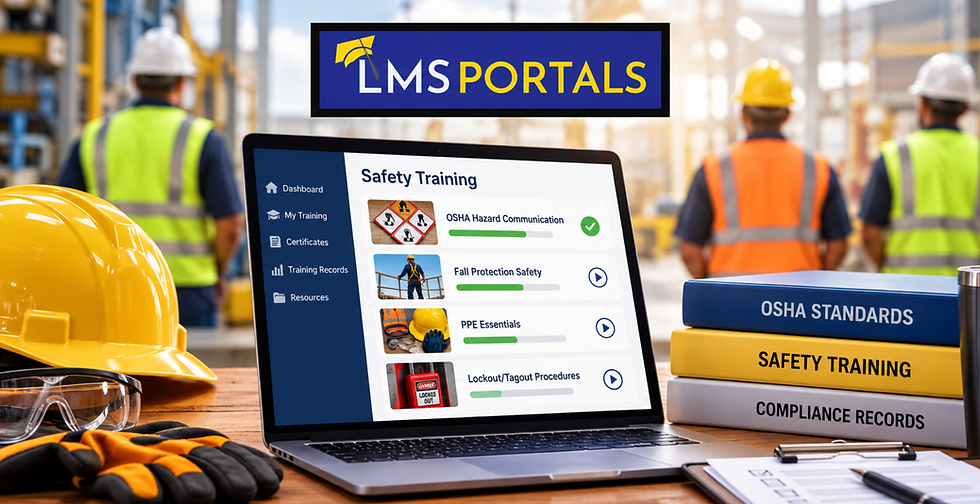
LMS Portals helps organizations develop, deliver, and manage online employee training through a flexible, branded learning management platform.
Rather than relying exclusively on generic safety courses, hotels can work with LMS Portals to create customized bloodborne pathogens training that reflects actual housekeeping responsibilities.
Training can incorporate hotel-specific examples, operational procedures, photographs, interactive activities, and assessments.
Courses can also be designed around an organization's existing safety policies and exposure control procedures.
This makes training more relevant to the employees completing it and helps connect safety concepts to daily housekeeping responsibilities.
Branded Training Portals for Hotel Groups
LMS Portals provides a multi-tenant LMS platform that supports branded training portals for different properties, departments, or operating divisions.
A hotel management company, for example, could establish a corporate training portal and separate portals for individual hotels.
Each property can provide employees with a familiar branded learning environment while supporting centralized administration and reporting.
This structure is particularly useful for hospitality organizations expanding through acquisitions, adding new properties, or managing independently operated locations.
Compliance Management, Reporting, and Recurring Training
LMS Portals supports learning paths, course assignments, completion tracking, reporting, and recurring training requirements.
Hotel administrators can use these capabilities to manage onboarding and annual refresher programs.
The platform can also support broader hospitality training initiatives, including workplace safety, chemical handling, hazard communication, guest service, emergency preparedness, and harassment prevention.
By combining custom course development with ongoing training administration, LMS Portals helps hotels build a more comprehensive employee development program.
Flexible Training Content and Scalable Delivery
LMS Portals supports SCORM-based course delivery, including dynamic SCORM content that can be updated as training materials evolve.
This is valuable when hotels revise safety policies, introduce new procedures, or need to update course content across their training programs.
Standalone SCORM packages can also be provided when required.
For hotel operators, the combination of flexible course development, branded learning environments, and centralized reporting offers an alternative to managing disconnected training materials and systems.
How Can Hotels Build a Stronger Housekeeping Safety Training Program?
Connecting Training With Daily Operations
Successful bloodborne pathogens training requires more than assigning an online course once a year.
Hotel management should evaluate housekeeping tasks, identify potential exposure risks, establish clear procedures, and ensure employees have the equipment and support necessary to work safely.
Training should reinforce practical decisions employees make during everyday activities, particularly when they encounter unexpected hazards.
Supervisors should also regularly review procedures, respond to employee concerns, and verify that safety expectations are being followed.
Making Employee Safety an Ongoing Priority
Hotels depend on housekeeping employees to maintain the standards guests expect.
Protecting those employees requires clear instruction, consistent procedures, and accessible training resources.
A structured bloodborne pathogens training program can help reduce preventable exposures, strengthen employee confidence, and support compliance with applicable workplace safety requirements.
With customized eLearning courses and a centralized learning management platform, hospitality organizations can make training easier to deliver, manage, and document.
LMS Portals helps hotels and hospitality management companies build scalable, branded training programs that support safer housekeeping operations across individual properties and entire hotel portfolios.
About LMS Portals
LMS Portals provides a flexible, SaaS-based multi-tenant learning management system for delivering training to employees, customers, partners, clients, and other learning audiences.
Our multi-portal architecture enables organizations to launch dedicated, branded learning environments while centrally managing users, courses, compliance, reporting, and administration.
The platform includes tools for creating and delivering SCORM-compliant courses, a library of ready-made training courses, and Learning Paths for building structured training programs. LMS Portals also supports virtual instructor-led training, certification programs, automation, reporting, and social learning.
Together, these capabilities make LMS Portals a scalable solution for organizations managing training across multiple audiences.
Contact us today to get started or visit our Partner Program pages


Comments