
Illinois Workplace Harassment Training Requirements: What Employers Need to Know


Building a workplace where employees feel safe, respected, and valued is more than simply complying with the law. It is an investment in employee engagement, organizational culture, and long-term business success.
Illinois has established mandatory workplace harassment training requirements that apply to nearly every employer in the state. Understanding these requirements helps organizations remain compliant while creating an environment where inappropriate behavior is less likely to occur.
A modern Learning Management System (LMS) simplifies this responsibility by delivering training online, tracking completions, issuing certificates, and maintaining detailed compliance records.
The Illinois Workplace Transparency Act
Mandatory Annual Training
The Illinois Workplace Transparency Act requires employers to provide annual sexual harassment prevention training for employees working within Illinois.
Unlike optional workplace development programs, this training is a legal requirement designed to educate employees about harassment prevention, reporting procedures, and employer responsibilities.
Why the Law Was Created
The legislation was designed to promote respectful workplaces while reducing incidents of harassment through education and awareness. By requiring annual training, Illinois encourages organizations to reinforce appropriate workplace behavior on a consistent basis rather than treating harassment prevention as a one-time event.
Which Employers Must Comply?
Broad Employer Coverage
Nearly every employer with employees working in Illinois is covered by the law, regardless of company size.
Whether an organization employs ten people or ten thousand, annual harassment prevention training is expected.
Covered Employees
The training requirement applies broadly across the workforce. Full-time employees, part-time workers, temporary staff, seasonal employees, interns, and many other workers performing services in Illinois should receive the required training.
New Employees
Many employers choose to assign harassment prevention training during onboarding instead of waiting for the annual training cycle. This ensures new employees understand workplace expectations from the beginning of their employment.
Training Content Requirements
Defining Sexual Harassment
Employees should receive a clear explanation of what constitutes sexual harassment under Illinois law. The training should distinguish between acceptable workplace interactions and prohibited conduct while providing realistic workplace examples.
Understanding Employee Rights
Training should explain both federal and Illinois laws protecting employees from workplace harassment. Employees benefit from understanding their legal protections as well as the organization's commitment to maintaining a respectful work environment.
Reporting Procedures
Every employee should know how to report concerns if harassment occurs. Training should explain reporting channels, confidentiality considerations, investigation procedures, and protections against retaliation.
Employer Responsibilities
The program should also explain how employers are expected to prevent harassment, investigate complaints promptly, and take appropriate corrective action when necessary.
Special Rules for Restaurants and Bars
Industry-Specific Training
Illinois recognizes that restaurants and bars face unique workplace situations involving customers, coworkers, vendors, and supervisors.
Because of these unique environments, hospitality employers must provide supplemental sexual harassment prevention training tailored specifically to restaurant and bar operations.
Written Policies
Restaurant employers are also required to maintain and distribute written sexual harassment prevention policies that comply with Illinois requirements.
Annual Training Is Required
One-Time Training Is Not Enough
Illinois requires qualifying harassment prevention training every year.
Annual education helps reinforce expectations, introduces policy updates, and ensures new employees receive consistent instruction alongside long-term staff members.
Keeping Employees Current
Workplaces continue to evolve as organizations adopt hybrid work arrangements, new communication technologies, and changing management practices. Annual training helps employees remain informed as workplace expectations continue to develop.
Beyond Compliance
Building Workplace Trust
Although compliance is mandatory, harassment prevention training produces benefits that extend well beyond satisfying legal requirements.
Employees who understand workplace expectations are generally more confident reporting concerns, communicating professionally, and contributing to a respectful work environment.
Strengthening Organizational Culture
Consistent training reinforces shared values across every department and management level. Employees receive the same expectations regarding respectful behavior, helping reduce misunderstandings while strengthening collaboration.
Reducing Organizational Risk
Organizations that invest in ongoing harassment prevention education often experience fewer workplace conflicts, lower legal exposure, and stronger employee confidence in leadership.
Common Compliance Challenges
Employee Turnover
Hiring throughout the year creates ongoing compliance responsibilities. New employees need immediate access to required training while former employees should be removed from future assignments.
Multi-State Operations
Organizations operating in multiple states frequently encounter different harassment training requirements depending on employee location. Managing these varying regulations manually can quickly become complicated.
Remote and Hybrid Employees
Today's workforce often includes employees working remotely or from multiple locations. Employers must ensure every eligible employee receives required training regardless of where they perform their work.
Documentation Requirements
Maintaining accurate completion records is critical. During audits or legal proceedings, employers may need to demonstrate exactly who completed training, when it occurred, and what material was covered.
How a Learning Management System Helps
Automated Course Assignments
An LMS automatically assigns required training to new employees and recurring annual learners without requiring constant administrative oversight.
Online Learning Anywhere
Employees can complete required harassment training from virtually any location using computers, tablets, or smartphones. This flexibility supports office-based, remote, and hybrid workforces alike.
Automated Notifications
Training reminders help employees complete courses before deadlines while reducing manual follow-up by administrators.
Accurate Compliance Records
Completion history, assessment results, certificates, and enrollment records are securely maintained, making audits and compliance reporting significantly easier.
Supporting Managers and Supervisors
Leadership Has Additional Responsibilities
Managers require additional education beyond employee-level awareness training.
Supervisors must understand how to recognize inappropriate behavior, respond appropriately to complaints, document concerns, maintain confidentiality, and escalate issues according to company policy.
Preventing Problems Early
Well-trained supervisors often identify potential issues before they become formal complaints, helping organizations resolve concerns quickly and appropriately.
Managing Multiple Locations
Consistent Training Across the Organization
Organizations with multiple offices, retail stores, healthcare facilities, manufacturing sites, or franchise locations benefit from centralized training management.
An LMS ensures every employee receives the same high-quality instruction regardless of where they work.
Simplified Administration
Corporate administrators can monitor organization-wide compliance while local managers oversee progress within their own departments or locations.
Why Organizations Choose LMS Portals
Designed for Compliance Training
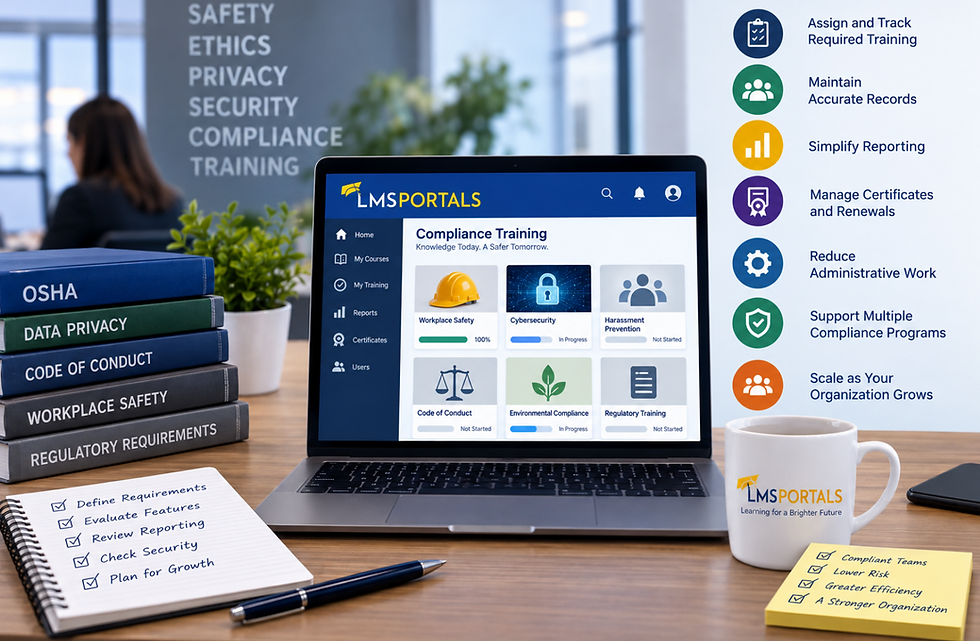
LMS Portals provides a cloud-based learning platform that helps organizations efficiently manage compliance training from a single centralized system.
Employers can automatically assign Illinois workplace harassment training, monitor employee progress in real time, generate compliance reports, and maintain permanent training records.
Built for Growing Organizations
Organizations with multiple departments, divisions, franchises, clients, or business locations can create branded learning portals while maintaining centralized administrative control. This allows every group to have its own customized learning environment without sacrificing consistency.
Powerful Automation Features
LMS Portals includes automated enrollment, recurring training assignments, certificates of completion, learning paths, webinar integration, assessments, document management, reporting dashboards, and renewal reminders. These features significantly reduce administrative workload while helping organizations remain compliant year after year.
Flexible for Modern Workforces
Because LMS Portals is entirely cloud-based, employees can complete required training from virtually anywhere. This flexibility supports remote employees, hybrid work arrangements, traveling staff, and organizations with geographically distributed teams.
Preparing for Future Compliance
Adapting to Changing Regulations
Employment laws continue to evolve, and organizations should expect additional compliance training requirements over time.
A modern LMS provides the flexibility to introduce new compliance courses as regulations change without disrupting existing training programs.
A Long-Term Investment
Rather than viewing compliance training as an annual obligation, organizations increasingly see it as part of a broader employee development strategy that promotes professionalism, accountability, and continuous learning.
Summary
Illinois' workplace harassment training requirements reflect the state's commitment to creating respectful and inclusive workplaces. While annual training is legally required, organizations that invest in meaningful education gain benefits that extend well beyond compliance.
Effective harassment prevention training strengthens workplace culture, improves employee confidence, reduces organizational risk, and equips supervisors to respond appropriately when concerns arise.
Using a modern Learning Management System such as LMS Portals makes these responsibilities significantly easier by automating training delivery, tracking completion records, issuing certificates, and maintaining comprehensive compliance documentation. As organizations continue to grow and workplace regulations evolve,
LMS Portals provides the scalable technology employers need to stay compliant while building stronger, more respectful workplaces.
About LMS Portals
At LMS Portals, we provide our clients and partners with a mobile-responsive, SaaS-based, multi-tenant learning management system that allows you to launch a dedicated training environment (a portal) for each of your unique audiences.
The system includes built-in, SCORM-compliant rapid course development software that provides a drag and drop engine to enable most anyone to build engaging courses quickly and easily.
We also offer a complete library of ready-made courses, covering most every aspect of corporate training and employee development.
If you choose to, you can create Learning Paths to deliver courses in a logical progression and add structure to your training program. The system also supports Virtual Instructor-Led Training (VILT) and provides tools for social learning.
Together, these features make LMS Portals the ideal SaaS-based eLearning platform for our clients and our Reseller partners.
Contact us today to get started or visit our Partner Program pages


Comments