
How Can an LMS Support Talent Development?

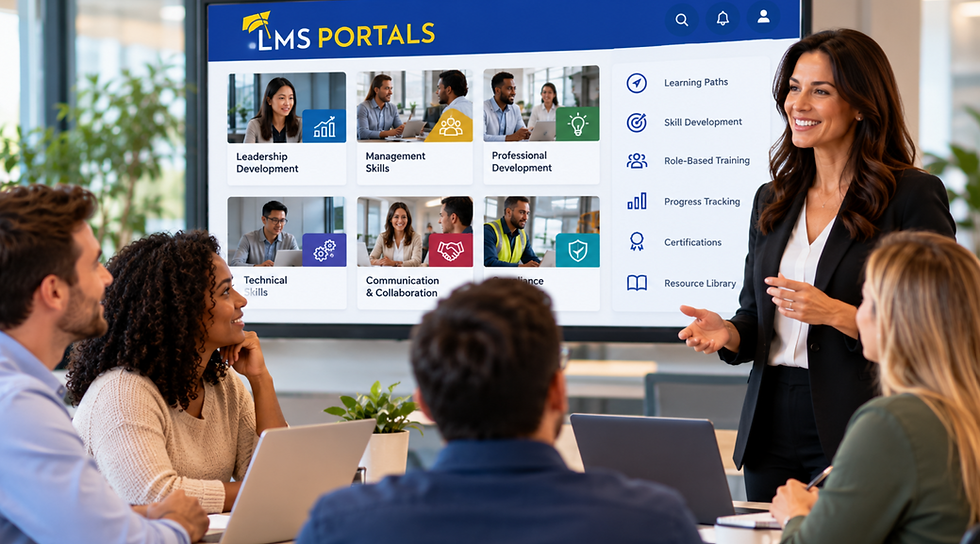
Organizations increasingly recognize that developing talent is not simply an HR initiative. It is an important part of building the skills, leadership capabilities, and workforce capacity required to support long-term business performance.
Employees need opportunities to expand their knowledge, strengthen existing skills, develop new capabilities, and prepare for greater responsibilities. At the same time, organizations need a practical way to deliver these development opportunities consistently across departments, locations, and employee populations.
A learning management system (LMS) can provide the technology foundation for these efforts.
An LMS helps organizations organize learning resources, deliver employee development programs, create structured learning paths, track participation, measure progress, and make development opportunities more accessible to employees.
When incorporated into a broader talent development strategy, an LMS can help transform employee learning from a collection of occasional training activities into an ongoing and scalable development program.
What Is Talent Development?
Talent development is the process of helping employees build the knowledge, skills, and capabilities they need to succeed in their current roles and prepare for future opportunities.
Talent Development Goes Beyond Training
Training and talent development are closely related, but they are not necessarily the same thing.
Training often addresses a specific requirement. An employee may need to learn a new software application, complete compliance training, understand a company procedure, or acquire a particular job skill.
Talent development takes a broader and often longer-term view.
It may include technical training, leadership development, professional skills, mentoring, career development, cross-functional learning, management training, and other activities designed to help employees continue growing throughout their careers.
An LMS can support both immediate training requirements and longer-term employee development initiatives.
Why Is Talent Development Important?
Organizations depend on the capabilities of their people. As technologies, customer expectations, business models, and job responsibilities change, the skills required from employees change as well.
Organizations that do not continually develop their workforce may eventually encounter significant skills gaps.
Building Skills From Within
Talent development allows organizations to build more of the capabilities they need internally.
Instead of relying entirely on external hiring whenever a new skill is required, companies can invest in developing existing employees.
Effective talent development can help organizations:
Strengthen employee skills
Prepare employees for expanded responsibilities
Develop future managers and leaders
Support internal career opportunities
Address emerging skill gaps
Improve organizational adaptability
Retain institutional knowledge
Create a stronger culture of learning
Technology alone cannot create an effective talent development strategy, but an LMS can make that strategy considerably easier to deliver and manage.
How Does an LMS Support Talent Development?
An LMS provides a centralized environment where organizations can organize and deliver learning opportunities to employees.
Creating a Central Destination for Employee Learning
Without a centralized learning platform, development resources can become scattered across file-sharing systems, email, websites, video platforms, presentations, and departmental systems.
Employees may not know what training is available or where to find it.
An LMS provides a central destination where employees can access courses, videos, documents, assessments, learning paths, and other development resources.
This makes learning more visible and accessible while giving administrators a consistent way to manage the organization's development programs.
How Can an LMS Support Continuous Learning?
Talent development is most effective when learning is viewed as an ongoing activity rather than an occasional event.
Moving Beyond One-Time Training
Traditional workplace training is often event-driven. Employees attend a workshop, complete an annual course, or participate in training when a new system is introduced.
Continuous learning takes a different approach.
Employees are encouraged to regularly develop new skills, explore learning resources, and expand their capabilities.
An LMS can support continuous learning by giving employees ongoing access to a growing library of development resources.
Organizations might offer content related to leadership, communication, technology, project management, customer service, cybersecurity, business skills, management, or industry-specific knowledge.
Over time, the LMS can become an important component of the organization's learning culture.
How Can Learning Paths Support Employee Development?
Not every employee development program should consist of individual, unrelated courses.
Some skills require employees to progress through a sequence of learning activities.
Creating Structured Development Programs
Learning paths allow organizations to organize courses and resources into structured programs.
For example, an aspiring manager learning path might include courses covering communication, coaching, conflict resolution, performance management, delegation, and leadership fundamentals.
A new sales professional might follow a path that includes product knowledge, sales methodology, CRM training, negotiation, and customer communication.
Learning paths help organizations provide employees with a clearer development journey instead of simply presenting a large catalog of unrelated courses.
How Can an LMS Support Role-Based Development?
Different roles require different capabilities.
An effective talent development program should recognize these differences rather than providing identical training to everyone.
Aligning Learning With Job Responsibilities
An LMS can help organizations organize employees into groups and assign learning based on job function, department, responsibility, location, or other criteria.
A company might create different development programs for:
New employees
Frontline employees
Sales professionals
Customer service teams
Technical employees
Supervisors
Managers
Senior leaders
This makes learning more relevant to employees and helps organizations align development activities with workforce needs.
How Can an LMS Help Address Skills Gaps?
Organizations frequently discover gaps between the capabilities they currently have and the capabilities they will need in the future.
Talent development can help close those gaps.
Connecting Training With Workforce Needs
Once an organization identifies a skills gap, an LMS can help deliver the learning required to address it.
For example, a company introducing new technology may need employees to develop new technical skills. A rapidly growing organization may need to prepare more employees for management positions. A company expanding internationally may need stronger cross-cultural communication and leadership capabilities.
The LMS provides the infrastructure for delivering these programs across the organization.
Administrators can assign appropriate learning, monitor participation, and determine whether employees are completing the development activities associated with the initiative.
How Can an LMS Support Upskilling?
Upskilling focuses on helping employees strengthen or expand the skills associated with their current careers.
It has become increasingly important as job requirements continue to evolve.
Helping Employees Build New Capabilities
An LMS allows organizations to make upskilling opportunities available across the workforce.
Employees might develop stronger analytical skills, improve communication, learn new technology, strengthen management capabilities, or develop expertise related to their profession.
Organizations can create dedicated learning paths for specific skill areas and make those programs available to employees who need or want to develop those capabilities.
This provides a scalable way to continually strengthen workforce skills.
How Can an LMS Support Reskilling?
Sometimes organizations need employees to develop capabilities that are significantly different from those required in their current roles.
This is often referred to as reskilling.
Preparing Employees for Changing Roles
Technological change, automation, artificial intelligence, organizational restructuring, and changing customer needs can all alter the types of work employees perform.
Rather than relying entirely on external hiring, organizations may be able to prepare existing employees for new responsibilities.
An LMS can provide structured reskilling programs that combine courses, assessments, resources, and learning paths.
This gives organizations a systematic way to help employees prepare for new types of work.
How Can an LMS Support Leadership Development?
Developing future leaders is an important component of talent development.
Organizations need employees who are prepared to move into supervisory, management, and leadership positions as opportunities arise.
Building a Leadership Pipeline
An LMS can support leadership development programs at multiple levels.
New supervisors may need training in delegation, communication, coaching, conflict resolution, and performance management.
Experienced managers may need more advanced development related to strategy, decision-making, change management, organizational leadership, or developing other leaders.
Organizations can create leadership learning paths that provide increasingly advanced development opportunities as employees progress.
This helps create a more structured approach to building leadership capabilities internally.
How Can an LMS Support Career Development?
Employees often want to understand how they can continue developing professionally within their organization.
Learning can play an important role in supporting those aspirations.
Giving Employees Greater Ownership of Development
Organizations can use an LMS to provide both assigned and self-directed learning opportunities.
Assigned learning ensures employees complete development activities required for their roles.
Self-directed learning gives employees the ability to explore additional topics based on their interests and career goals.
For example, an employee interested in becoming a manager might voluntarily complete leadership courses before applying for a supervisory position.
Making these opportunities readily available can encourage employees to take greater ownership of their professional development.
How Can an LMS Help Develop Managers?
Managers play an important role in employee development, but managers themselves also require ongoing development.
Providing Consistent Management Training
Without a structured program, management practices can vary significantly across an organization.
One manager may have extensive leadership experience while another may have been promoted primarily because of technical expertise.
An LMS allows organizations to establish a common foundation of management knowledge.
Managers can receive consistent training on topics such as coaching, communication, employee development, performance conversations, workplace policies, leadership, and team management.
This can help organizations develop more consistent management practices across departments and locations.
How Can an LMS Support Personalized Learning?
Employees do not all have the same experience, responsibilities, skills, or career goals.
Talent development programs should account for these differences.
Creating More Relevant Learning Experiences
Organizations can use groups, learning paths, course assignments, and catalogs to provide different learning experiences to different employee populations.
New managers might receive one development path while experienced managers receive another. Technical employees may access specialized technical training while customer-facing employees receive development related to communication and service.
The objective is not necessarily to create a completely unique program for every employee.
Instead, organizations can create targeted development experiences for meaningful employee groups and roles.
How Does an LMS Help Track Talent Development?
Delivering learning is only part of the process. Organizations also need visibility into participation and progress.
Turning Learning Activity Into Useful Information
An LMS can provide administrators with records showing course enrollment, completion, assessment performance, certifications, and other learning activity.
This information can help organizations understand whether employees are participating in development initiatives and progressing through assigned programs.
For example, an organization running a leadership development program could monitor how many participants have started the program, which courses they have completed, and whether they have finished the required learning path.
This provides more visibility than development programs managed through spreadsheets, email, or disconnected systems.
Can an LMS Support Multiple Talent Development Programs?
Larger organizations often need to deliver different development programs to different parts of the workforce.
A single training environment may not always provide the organizational flexibility they need.
Supporting Departments, Locations, and Business Units
A multi-tenant LMS can provide separate learning environments for different audiences while allowing the organization to maintain centralized oversight.
For example, an organization might provide separate training portals for different business units, geographic regions, departments, subsidiaries, customers, or partner organizations.
Each portal can be configured around the needs of its audience while remaining part of a broader learning ecosystem.
This can be especially valuable as talent development programs expand across a complex organization.
How Can LMS Portals Support Talent Development?
LMS Portals provides a multi-tenant learning management platform that organizations can use to create, deliver, and manage training across multiple audiences.
Create Branded Learning Environments
Organizations can create branded training portals for different departments, business units, customers, partners, or other audiences.
This allows learning programs to be tailored to specific groups while being managed through a centralized LMS environment.
Build Structured Development Programs
LMS Portals can be used to organize courses and training resources into structured programs that support onboarding, professional development, leadership training, compliance, and other workforce initiatives.
Organizations can create learning experiences designed around specific roles or development objectives rather than relying on a single undifferentiated course catalog.
Centralize Training Content
Training resources can be organized within the platform so employees have a consistent destination for learning.
Organizations can combine internally developed content with other learning resources to create a broader employee development library.
Track Learning Activity
Administrators can monitor learner activity and training progress, helping organizations maintain visibility into participation and completion.
This is particularly useful when development programs involve large employee populations or multiple training audiences.
Scale Talent Development Across Multiple Audiences
The multi-tenant architecture of LMS Portals can be particularly valuable for organizations managing learning across multiple departments, locations, clients, partners, or other groups.
Rather than treating every training audience as an entirely separate initiative, organizations can establish multiple portals within a broader learning environment.
What Are the Benefits of Using an LMS for Talent Development?
An LMS brings structure, accessibility, scalability, and visibility to talent development.
Organizations can centralize learning resources, create development paths, provide role-based learning, support upskilling and reskilling, develop future leaders, and give employees greater access to professional development opportunities.
Perhaps most importantly, an LMS makes it easier to move from isolated training events toward a more systematic approach to workforce development.
The technology does not replace managers, mentors, coaching, hands-on experience, or other important elements of employee development. Instead, it provides the infrastructure that helps connect these broader initiatives with organized and accessible learning.
Building a Scalable Talent Development Strategy
Talent development is becoming increasingly important as organizations respond to changing technology, evolving job requirements, new workforce expectations, and persistent skills gaps.
Companies need practical ways to help employees continue learning throughout their careers.
An LMS can provide the foundation for delivering these opportunities at scale.
By centralizing learning, creating structured development programs, supporting role-based training, tracking progress, and making learning more accessible, organizations can build a more consistent approach to developing their workforce.
For organizations managing multiple departments, business units, locations, or external audiences, LMS Portals extends this approach through a multi-tenant architecture that supports multiple branded learning environments within a centralized platform.
The result is not simply a system for delivering courses. It is a scalable learning infrastructure that can support continuous employee development as the organization and its talent needs evolve.
About LMS Portals
LMS Portals provides a flexible, SaaS-based multi-tenant learning management system for delivering training to employees, customers, partners, clients, and other learning audiences.
Our multi-portal architecture enables organizations to launch dedicated, branded learning environments while centrally managing users, courses, compliance, reporting, and administration.
The platform includes tools for creating and delivering SCORM-compliant courses, a library of ready-made training courses, and Learning Paths for building structured training programs. LMS Portals also supports virtual instructor-led training, certification programs, automation, reporting, and social learning.
Together, these capabilities make LMS Portals a scalable solution for organizations managing training across multiple audiences.
Contact us today to get started or visit our Partner Program pages


Comments