
Building a Massachusetts Workplace Compliance Training Program


Massachusetts has long been recognized as one of the nation's most progressive states when it comes to employment law. While federal regulations establish a baseline for workplace compliance, Massachusetts employers must also navigate a complex set of state-specific requirements covering discrimination, harassment prevention, wage and hour laws, earned sick time, paid family and medical leave, workplace safety, employee privacy, and more.
For organizations with employees located throughout Massachusetts—or companies hiring remote workers in the Commonwealth—compliance training is no longer something that can be addressed with a generic, one-size-fits-all learning program.
Employees need training that reflects Massachusetts law, organizational policies, and the practical realities of today's workplace.
An effective workplace compliance training program protects employees, reduces organizational risk, demonstrates a commitment to ethical business practices, and creates a stronger workplace culture. Just as importantly, it provides employers with documented evidence that compliance education has been delivered consistently across the organization.
Understanding Massachusetts Workplace Compliance
Compliance training extends well beyond simply meeting legal obligations. It helps employees understand expectations, recognize inappropriate behavior, respond appropriately to workplace concerns, and make informed decisions in situations that may involve legal or ethical risk.
Massachusetts employers face requirements and guidance from numerous agencies, including:
Massachusetts Commission Against Discrimination (MCAD)
Massachusetts Attorney General's Office
Massachusetts Department of Family and Medical Leave
Massachusetts Department of Labor Standards
Massachusetts Department of Public Health
Federal agencies such as the EEOC, OSHA, and the U.S. Department of Labor
Each agency oversees different aspects of employment compliance, making it essential for organizations to maintain an organized, comprehensive training strategy.
Core Topics Every Massachusetts Compliance Program Should Include
Anti-Harassment and Respectful Workplace Training
Massachusetts employers are expected to take reasonable steps to prevent workplace harassment and discrimination. While state law encourages employers to provide anti-harassment education, organizations increasingly view comprehensive harassment prevention training as a best practice rather than simply a legal precaution.
Training should cover:
Sexual harassment prevention
Protected classes under Massachusetts law
Workplace bullying and inappropriate conduct
Bystander intervention
Manager responsibilities
Complaint reporting procedures
Protection against retaliation
Managers and supervisors typically require additional instruction because they often serve as the first point of contact when workplace concerns arise.
Discrimination and Equal Employment Opportunity
Massachusetts law provides broad protections against discrimination based on characteristics including age, race, color, religion, national origin, disability, sex, sexual orientation, gender identity, pregnancy, genetic information, military service, and additional protected classifications.
Employees should understand:
What unlawful discrimination looks like
How unconscious bias can affect workplace decisions
Reasonable accommodation responsibilities
Inclusive workplace behaviors
Reporting procedures
The organization's commitment to equal opportunity
Training in this area supports both compliance objectives and diversity, equity, and inclusion initiatives.
Wage and Hour Compliance
Massachusetts wage and hour laws are among the most actively enforced employment regulations in the state. Even well-intentioned employers can face significant penalties if employees or supervisors misunderstand compensation requirements.
Training for managers and HR professionals should address:
Minimum wage requirements
Overtime eligibility
Timekeeping expectations
Meal and rest period policies
Proper employee classification
Recordkeeping requirements
Payroll compliance responsibilities
Organizations with multiple locations often benefit from standardized manager training to ensure consistent practices across departments.
Massachusetts Paid Family and Medical Leave (PFML)
The Massachusetts Paid Family and Medical Leave program introduced new responsibilities for employers regarding employee leave administration, employee rights, payroll contributions, and workplace communication.
Compliance training should help managers understand:
Employee eligibility
Qualifying leave events
Job protection requirements
Employer responsibilities
Coordination with company leave policies
Confidentiality considerations
Because leave laws continue to evolve, organizations should review and update training regularly.
Earned Sick Time Requirements
Massachusetts employers must also comply with the state's Earned Sick Time law.
Training should explain:
Employee eligibility
Accrual methods
Appropriate use of sick leave
Documentation expectations
Anti-retaliation protections
Manager responsibilities
Supervisors who understand these requirements are less likely to unintentionally violate employee rights.
Workplace Safety and OSHA Compliance
While OSHA regulations apply nationwide, Massachusetts employers should ensure safety training reflects both federal standards and the specific risks associated with their industry.
Common topics include:
Hazard communication
Emergency procedures
Fire safety
Personal protective equipment
Ergonomics
Bloodborne pathogens
Workplace violence prevention
Incident reporting
Organizations in healthcare, manufacturing, education, construction, transportation, and public services often require additional industry-specific safety education.
Data Privacy and Cybersecurity Awareness
Compliance increasingly extends beyond traditional HR topics.
Massachusetts organizations must also address employee responsibilities surrounding:
Data privacy
Confidential information
Cybersecurity awareness
Password security
Phishing attacks
Remote work security
Acceptable technology use
Personally identifiable information (PII)
With cyber threats growing each year, employee education has become one of the most effective risk management tools available.
Ethics and Code of Conduct
A comprehensive compliance program should reinforce the organization's ethical standards.
Employees benefit from training covering:
Conflicts of interest
Gifts and entertainment
Confidentiality
Fraud prevention
Financial integrity
Reporting ethical concerns
Whistleblower protections
Rather than focusing solely on rules, ethics training encourages employees to make sound decisions when policies may not clearly address every situation.
The Importance of Manager Training
Managers carry additional legal responsibilities and often determine whether compliance issues are handled effectively or become costly legal disputes.
Supervisor-focused training should include:
Documentation best practices
Conducting difficult conversations
Investigating complaints
Managing accommodations
Performance management
Leave administration
Preventing retaliation
Escalating concerns appropriately
Providing managers with additional compliance education strengthens organizational consistency and reduces liability.
Building an Ongoing Compliance Training Program
Compliance training should never be viewed as a one-time event during employee onboarding.
Instead, successful Massachusetts employers create continuous learning programs that include:
New Hire Orientation
Every employee should receive foundational compliance education shortly after joining the organization. Early training establishes expectations and reinforces company culture from day one.
Annual Refresher Training
Annual refresher courses reinforce critical concepts while helping organizations address changes in employment law, internal policies, and emerging workplace risks.
Event-Based Training
Organizations should also provide additional training whenever:
Significant legislation changes
Internal policies are revised
New technologies are introduced
Workplace incidents reveal knowledge gaps
Employees move into supervisory positions
A flexible learning strategy ensures training remains relevant rather than becoming outdated.
The Role of Technology in Compliance Training
Managing compliance training manually becomes increasingly difficult as organizations grow.
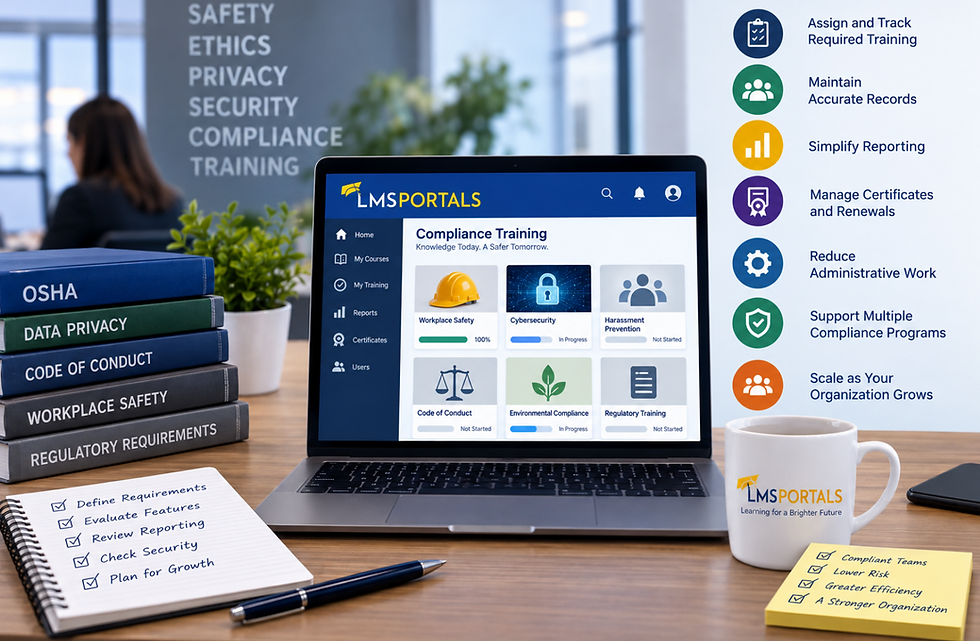
Modern learning management systems simplify administration by allowing organizations to:
Deliver online training anywhere
Track employee completion
Maintain training records
Automate reminders
Assign courses by department or role
Generate completion certificates
Produce audit-ready reports
These capabilities reduce administrative workload while providing documented evidence that required training has been completed.
For employers with remote or hybrid workforces, online delivery ensures employees receive consistent training regardless of location.
Measuring Training Effectiveness
Completing a course is only one measure of success.
Organizations should also evaluate:
Knowledge assessment scores
Completion rates
Employee feedback
Incident trends
Audit findings
Policy violations
Manager observations
Reviewing these metrics helps organizations continuously improve both training content and compliance outcomes.
Common Mistakes Massachusetts Employers Should Avoid
Many organizations unintentionally weaken their compliance efforts through avoidable mistakes.
One common issue is relying on generic national training that overlooks Massachusetts-specific legal requirements. While federal compliance is important, state laws often impose additional responsibilities that employees and managers must understand.
Another challenge is inconsistent training across departments. Different locations or managers may deliver conflicting information, creating unnecessary compliance risk.
Organizations also frequently neglect refresher training. Employment laws evolve regularly, and employees who completed compliance training several years ago may no longer understand current legal requirements or company policies.
Poor documentation presents another significant problem. During investigations or litigation, employers often need to demonstrate not only that training was available but also when employees completed it, what content was covered, and how learning was verified.
Finally, some employers focus exclusively on HR staff while overlooking managers. Since supervisors make many day-to-day employment decisions, they require deeper compliance knowledge than general employees.
Why a Learning Management System Makes Compliance Easier
As organizations grow, spreadsheets and paper sign-in sheets become increasingly difficult to manage.
A cloud-based learning management system provides a centralized platform where HR professionals can assign courses, monitor progress, issue reminders, and maintain permanent training records.
Employees appreciate the flexibility of completing courses from the office, home, or while traveling, while administrators gain immediate visibility into organizational compliance status.
When regulators, auditors, customers, or insurance providers request evidence of employee training, reports can often be generated within minutes rather than days.
Why Organizations Choose LMS Portals
Building a successful Massachusetts workplace compliance program requires more than quality course content. It also requires a learning platform that makes compliance administration simple, scalable, and cost-effective.
LMS Portals provides organizations with a flexible cloud-based learning management system designed to simplify workplace compliance training across organizations of every size.
Key benefits include:
Multi-tenant learning architecture that allows companies, associations, staffing firms, consultants, and franchise organizations to manage multiple branded training portals from a single platform.
Simple administration with intuitive tools for assigning courses, managing users, and tracking completion without requiring extensive technical expertise.
Automated learning workflows that reduce manual administrative work through enrollment management, notifications, and completion tracking.
Detailed reporting and documentation that provides the records needed for internal audits, customer requirements, and regulatory inquiries.
Custom branding so organizations can deliver training that reflects their own identity and strengthens employee engagement.
Support for SCORM-compliant content, allowing organizations to deliver internally developed courses or content from third-party providers.
Cloud-based access that enables employees to complete compliance training anytime and from virtually anywhere.
Scalable licensing that grows alongside the organization's compliance needs without requiring costly infrastructure investments.
Expert support from a team experienced in helping organizations deploy workplace learning and compliance programs efficiently.
Whether an employer is training a single Massachusetts office or managing multiple locations across the United States, LMS Portals provides the tools needed to administer consistent, well-documented compliance education.
Looking Ahead
Massachusetts employment laws will continue to evolve as new legislation, regulations, and workplace expectations emerge. Organizations that treat compliance training as an ongoing business process—not simply an annual requirement—are better positioned to adapt to these changes while reducing legal risk.
By combining current, state-specific training content with a modern learning management system, employers can create programs that educate employees, strengthen workplace culture, support managers, and provide the documentation necessary to demonstrate compliance.
For organizations seeking a practical, scalable approach to workplace compliance training, investing in both high-quality educational content and a robust learning platform is one of the most effective ways to build a safer, more informed, and legally compliant workplace throughout Massachusetts.
About LMS Portals
At LMS Portals, we provide our clients and partners with a mobile-responsive, SaaS-based, multi-tenant learning management system that allows you to launch a dedicated training environment (a portal) for each of your unique audiences.
The system includes built-in, SCORM-compliant rapid course development software that provides a drag and drop engine to enable most anyone to build engaging courses quickly and easily.
We also offer a complete library of ready-made courses, covering most every aspect of corporate training and employee development.
If you choose to, you can create Learning Paths to deliver courses in a logical progression and add structure to your training program. The system also supports Virtual Instructor-Led Training (VILT) and provides tools for social learning.
Together, these features make LMS Portals the ideal SaaS-based eLearning platform for our clients and our Reseller partners.
Contact us today to get started or visit our Partner Program pages


Comments